Growing up in New York State, Vermont was always surprisingly close, yet somehow I didn’t really start exploring our neighboring state until I was older. Once Sandy and I finally visited, though, it didn’t take long to understand why Vermont is such a popular destination, especially during the fall.
For our fall trip, we decided that rather than picking just one town and staying put, we wanted to turn our Vermont visit into a road trip. We made our way through some of the places we had always associated with a classic New England fall, including Burlington, Smugglers’ Notch, Stowe, Quechee, and Woodstock. Between the small towns, covered bridges, mountain roads and fall foliage, we got to experience several completely different sides of Vermont in one trip.
We’ve also visited other parts of Vermont during the warmer months. We explored the Colchester Causeway Trail during the summer and visited Manchester and Dorset for our friend’s wedding in June. While those particular photos have a lot more green than the rest of this post, they’re all places we’d consider adding to a longer fall road trip. If they were that beautiful during the warmer months, we can only imagine what they look like surrounded by fall colors.
For this guide, we’re going to work our way from northern Vermont to southern Vermont, starting around Burlington and Lake Champlain before heading through the mountains and eventually ending in Manchester. You can follow the route in this order for your own road trip or simply pick the destinations that work best for the amount of time you have.
Affiliate Disclosure: Some of the links on this site are affiliate links. This means we may earn a small commission at no extra cost to you if you make a purchase through them. Read the policies to know more.
Vermont in Fall
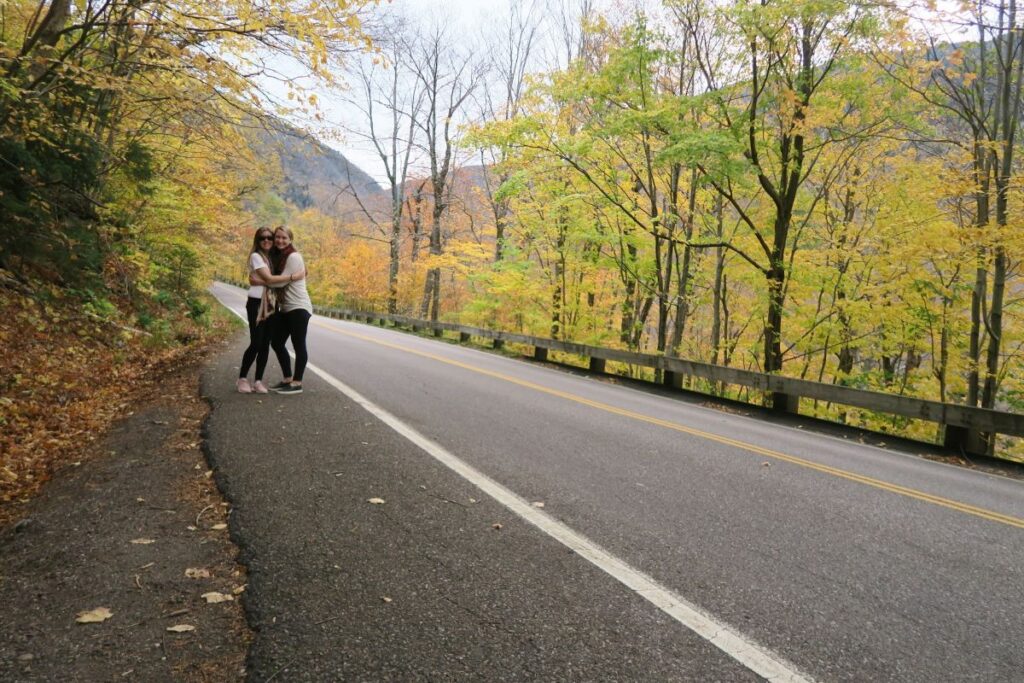
One thing we learned during our fall trip to Vermont is that planning around peak foliage isn’t an exact science. We were a little past peak (second weekend of October at that time) in many of the places we visited, but unfortunately going the weekend before simply wasn’t an option for us. Early October is often a great time to plan a Vermont fall trip, but peak color varies depending on the year, elevation and where you are in the state. Northern Vermont and higher elevations can also change earlier than areas farther south. It all just depends on the weather that year!
If seeing peak foliage is one of the main reasons for your trip, keep an eye on Vermont’s foliage reports as your travel dates get closer rather than relying on one specific weekend every year. And if your dates aren’t completely flexible, don’t let that stop you from going. We didn’t hit the absolute perfect weekend, and Vermont was still beautiful.
Here are some of our favorite places we’ve visited in Vermont, starting in the north and working our way south.
Burlington
Burlington gives you a completely different side of Vermont from the small towns and mountain scenery the state is so famous for. It’s the largest city in Vermont, but it still feels manageable compared with major cities elsewhere in the Northeast. Its location directly on Lake Champlain also gives you incredible views and makes it a great place to start a north-to-south Vermont road trip.
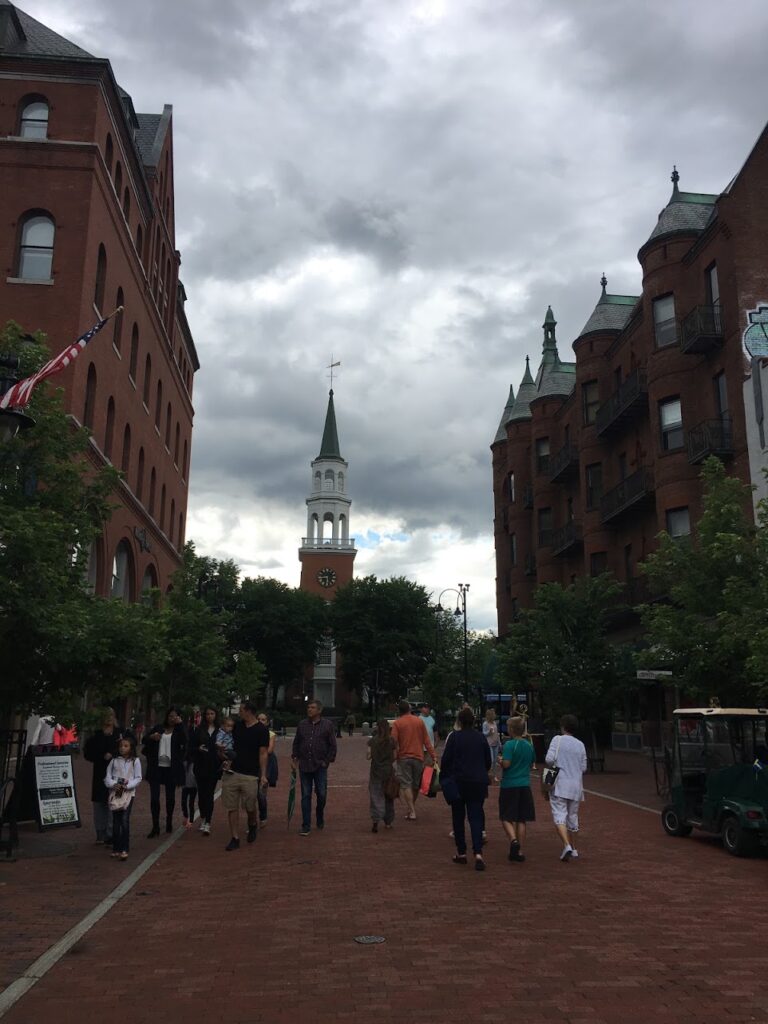
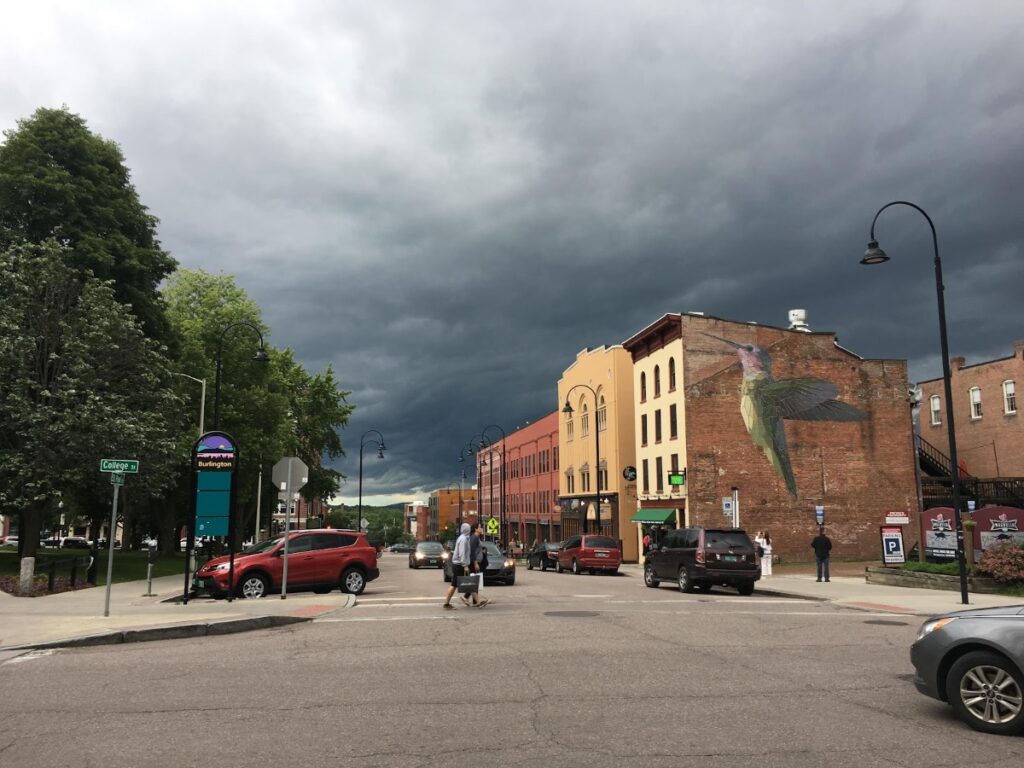
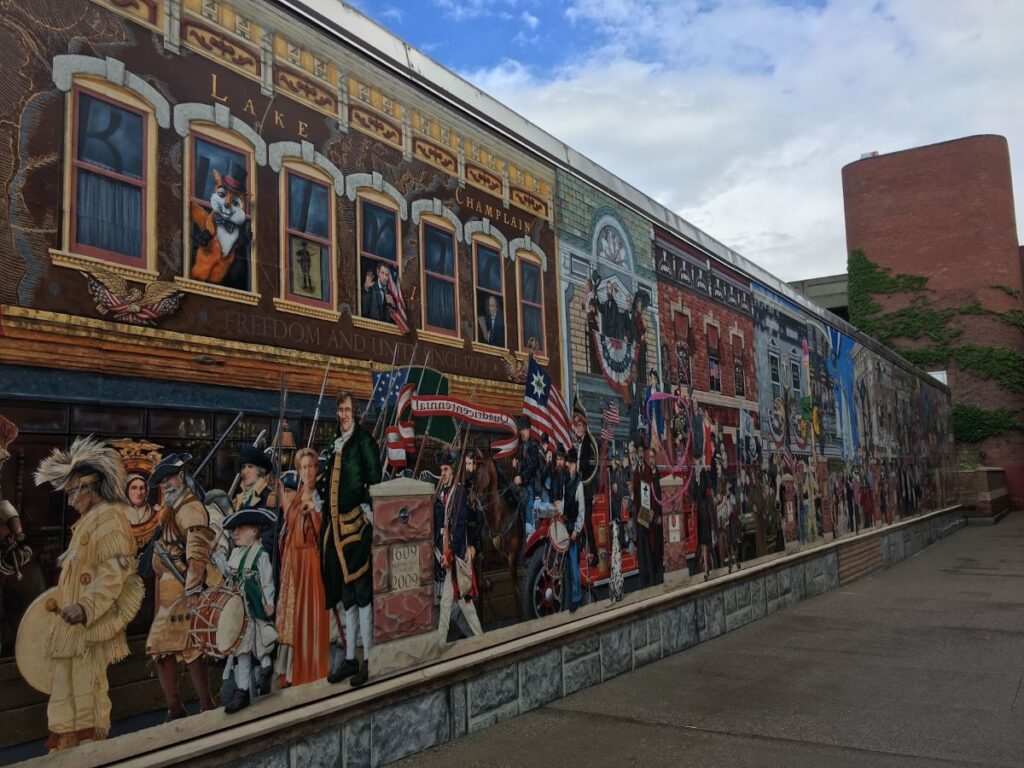
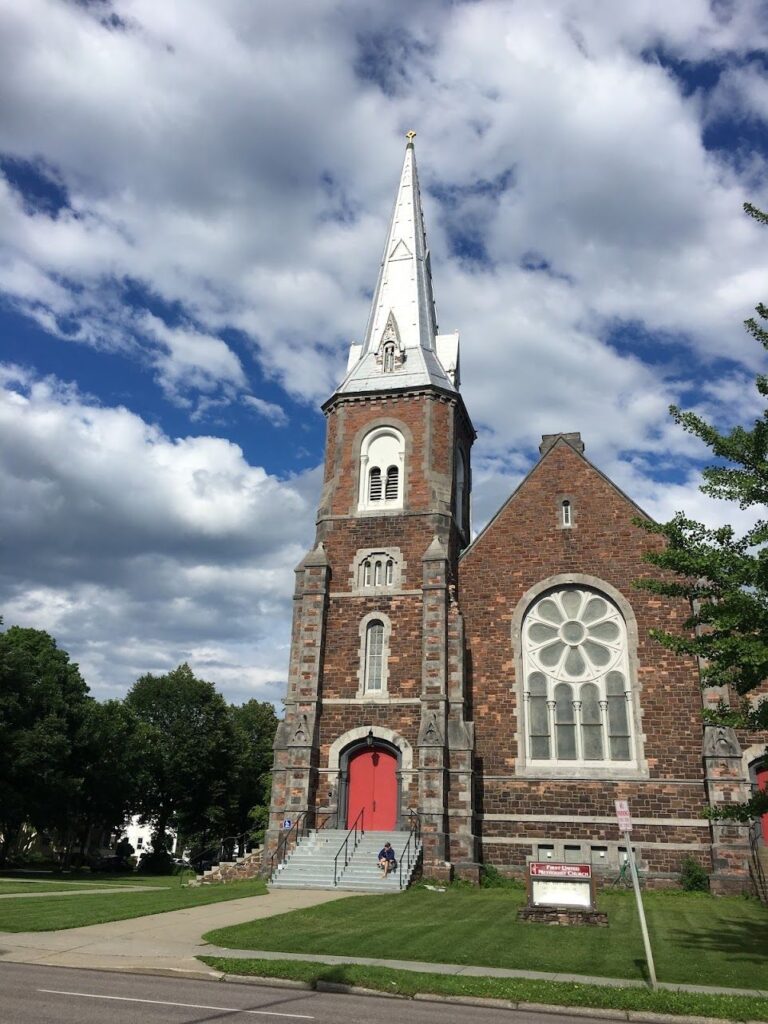
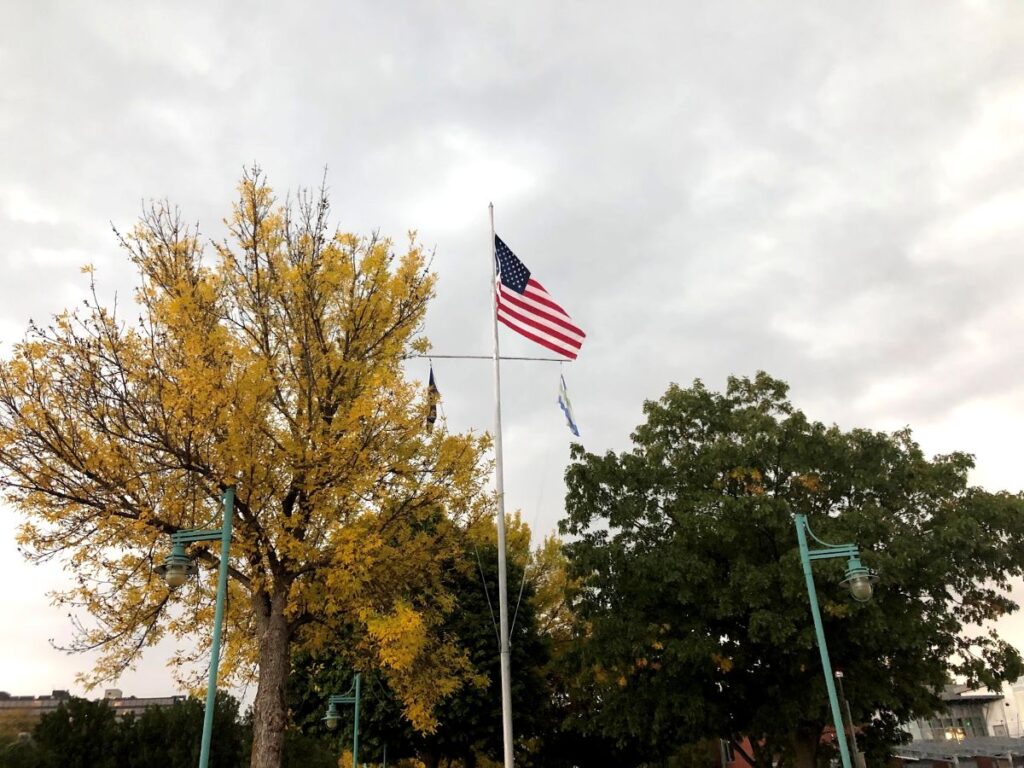
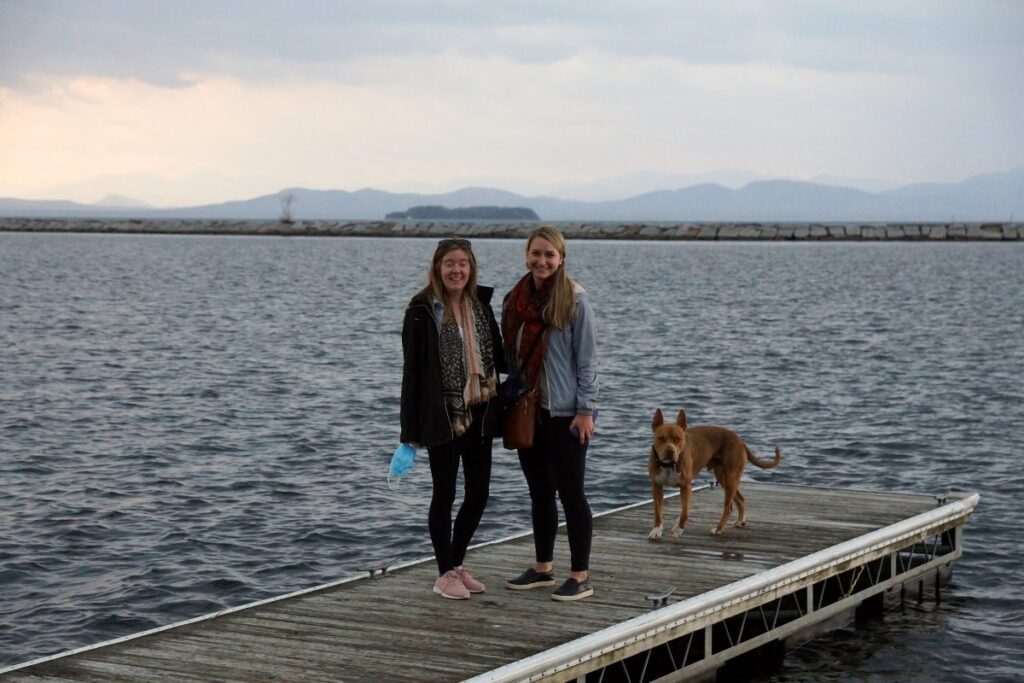
Spend some time exploring Church Street Marketplace, a pedestrian-friendly area in the heart of downtown filled with restaurants, shops and cafes. From there, head toward the waterfront and Lake Champlain. On a clear day, you can look across the lake toward the Adirondack Mountains in New York, which was especially fun for me after traveling over from our side of the state. It was a bit cloudy for us, but we enjoyed it. Plus got to meet a doggy friend (Burlington is very dog friendly).
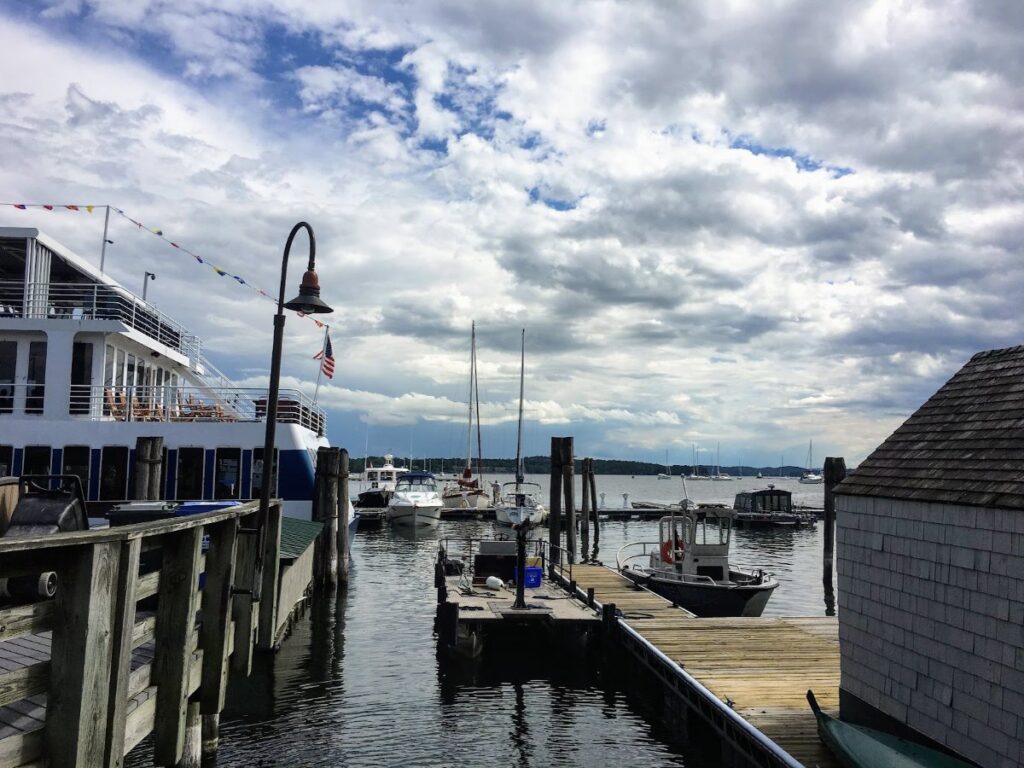
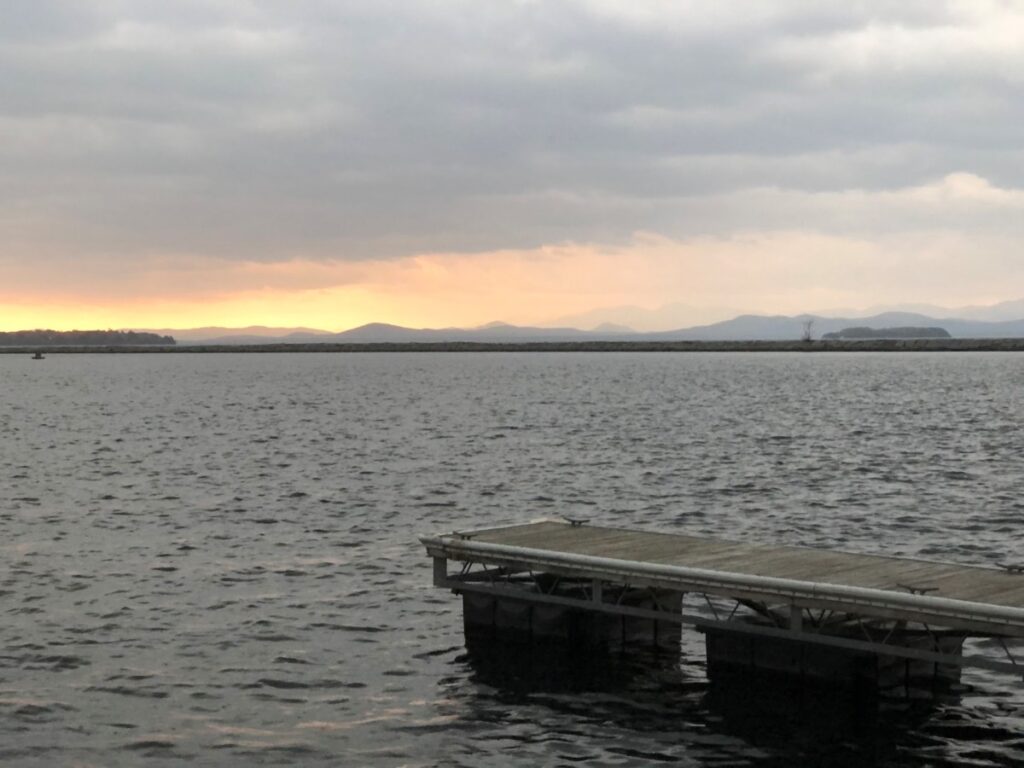
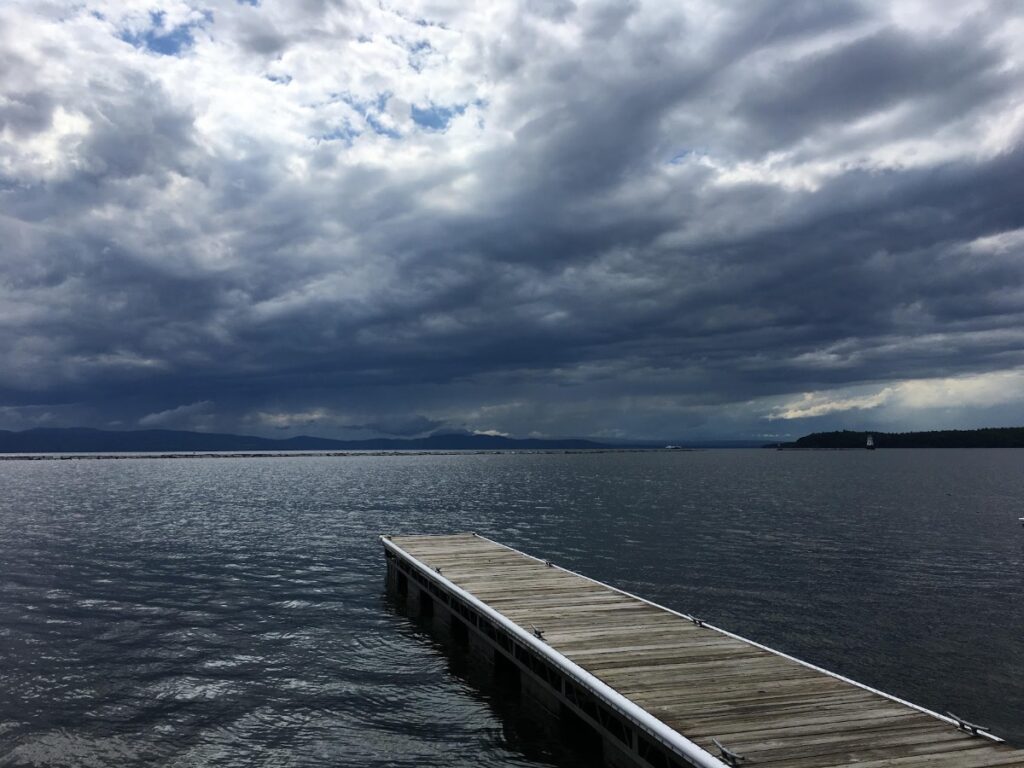
Burlington is also a good place to spend a night or two rather than simply passing through. You can explore downtown without needing to constantly get back into your car, enjoy the waterfront and use the city as a base for some of the other places around Lake Champlain.
Where to stay in Burlington:
- Hotel Vermont: One of Burlington’s better-known boutique hotels, it’s located between Church Street Marketplace and the Lake Champlain waterfront, making it easy to explore much of downtown without constantly getting back into your car. Sometimes it requires a 2-night minimum, FYI.
- Blind Tiger Burlington: Set inside a historic mansion, this is a more unusual alternative to a standard downtown hotel. Its individually designed rooms and historic setting give it a completely different feel from some of Burlington’s larger properties.
Colchester Causeway Trail
While you’re in the Burlington area, head north to the Colchester Causeway Trail for one of the most unique landscapes on this list. The causeway extends several miles into Lake Champlain and is part of the larger Island Line Trail, giving walkers and cyclists the unusual experience of being surrounded by water as they make their way along the path.
One disclaimer here: Sandy and I actually visited the Colchester Causeway Trail during the summer rather than during our fall road trip, which is why our photos from this section look considerably greener than the rest! But after experiencing it ourselves, I couldn’t leave it off a Vermont road-trip itinerary simply because we happened to visit during a different season.
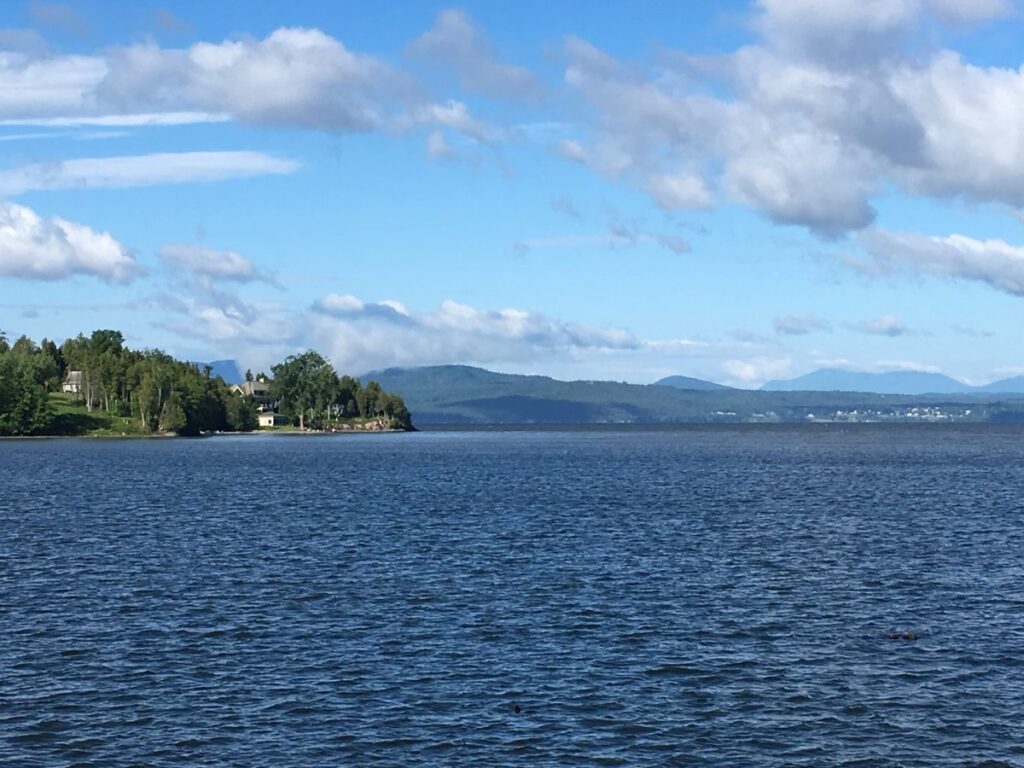
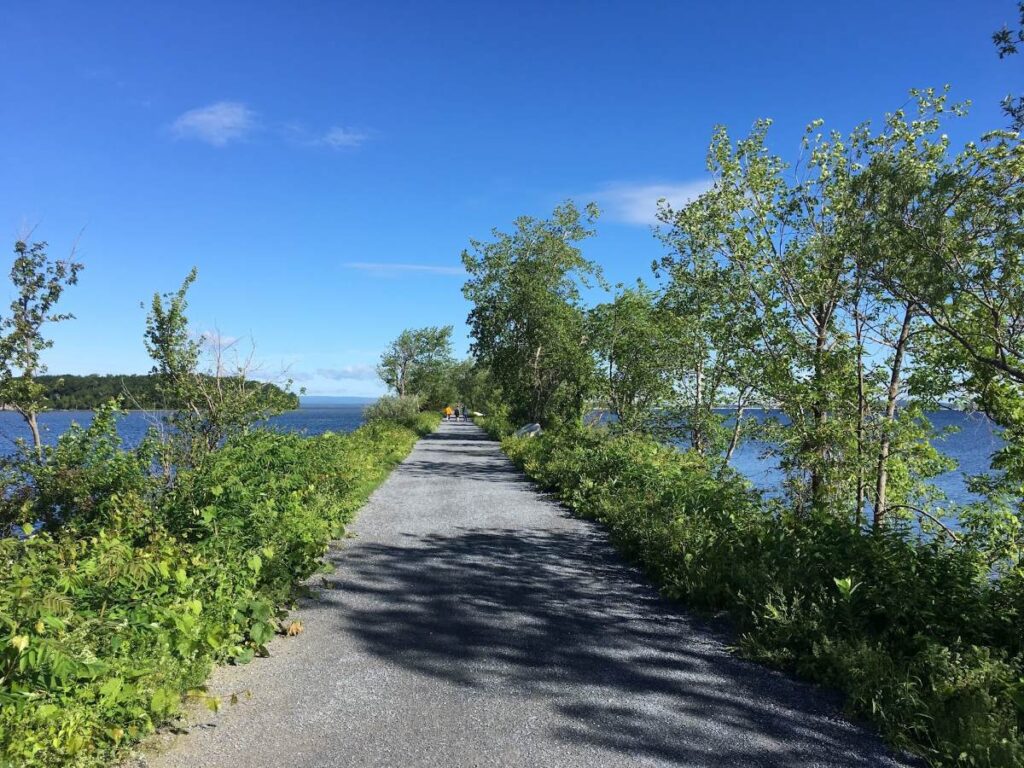
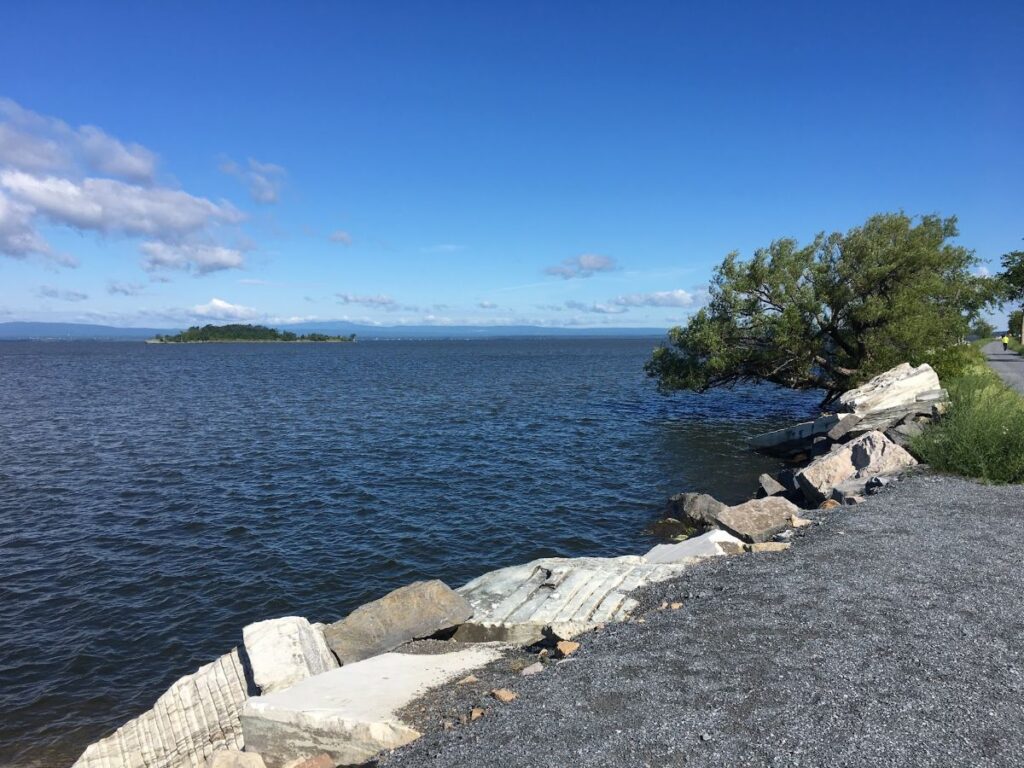
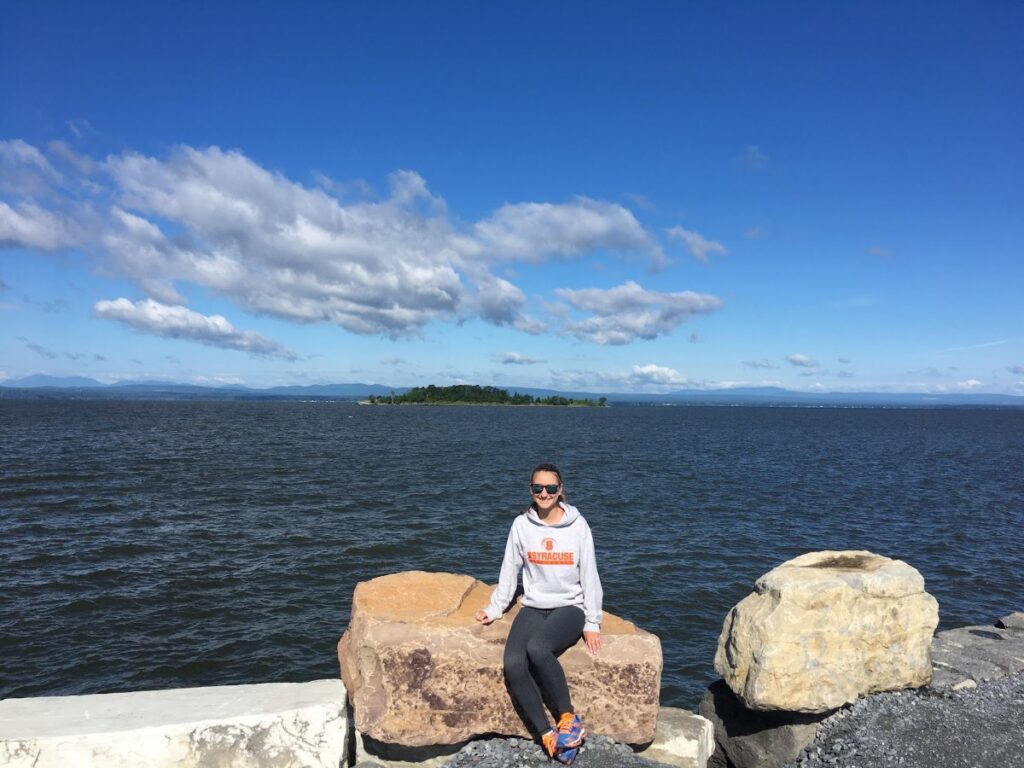
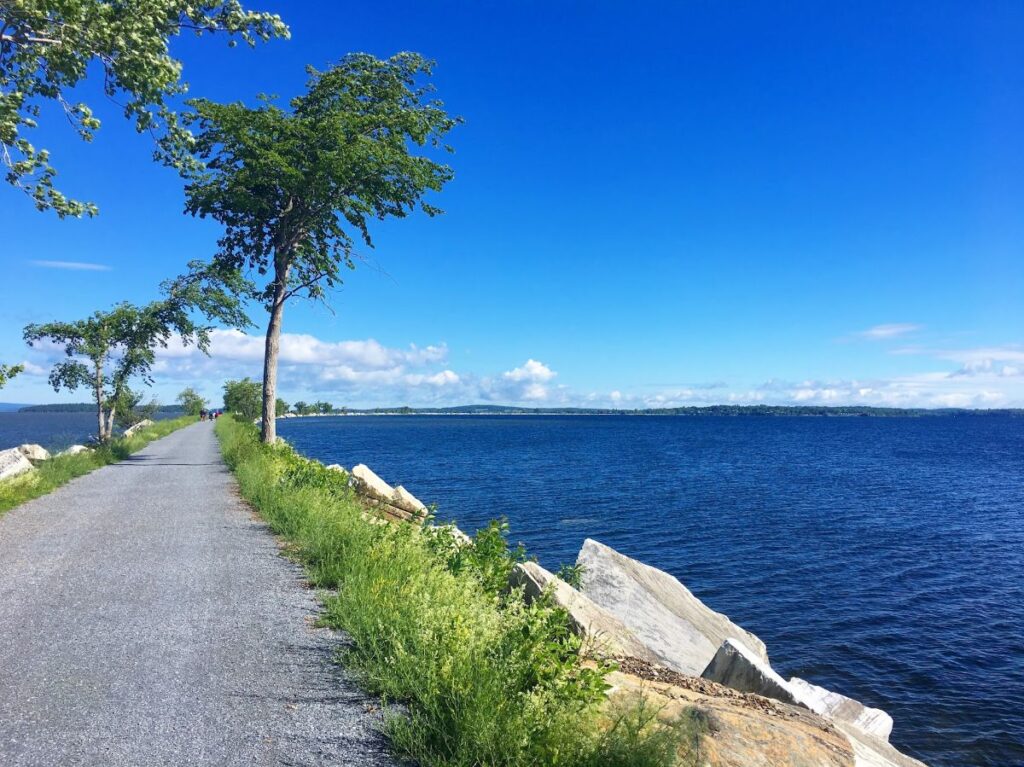
The views across Lake Champlain are beautiful, and the trail is a great option if you want to add something active to your trip after spending a lot of time driving. A seasonal bike ferry also operates across the cut in the causeway, allowing cyclists to continue toward the Champlain Islands when it’s operating. If that’s something you want to do, check the current schedule before your visit because ferry operations are seasonal.
Since Colchester is so close to Burlington, I wouldn’t switch hotels for this stop. Stay in Burlington and make the Causeway Trail an easy addition to your time around Lake Champlain.
Smugglers’ Notch
From the Burlington area, start making your way toward the mountains and Smugglers’ Notch. One of the most beautiful things you can do here is drive Vermont Route 108 through the Notch, where the narrow road winds between enormous rock formations and dense forest. You’ll also spot the famous tree tunnel!
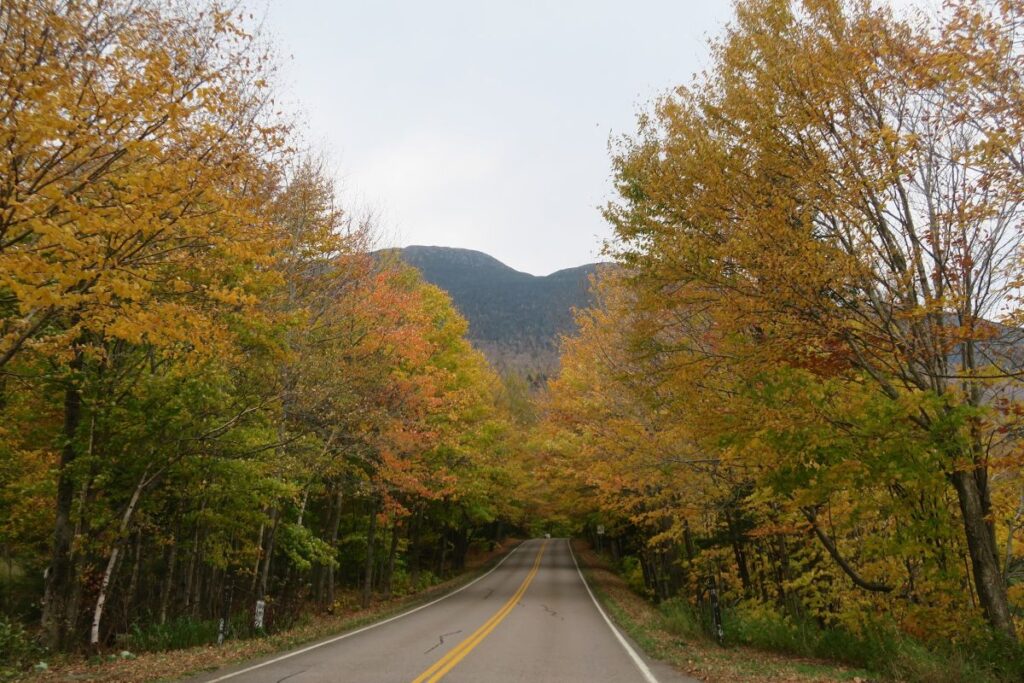
This isn’t necessarily a destination where you need a long checklist of attractions. The road and surrounding scenery are a huge part of the experience, especially during the fall. Give yourself extra time instead of treating Route 108 as simply a way to get from one destination to another. This is exactly the type of place where having a little flexibility built into your road-trip itinerary pays off, especially if you want to stop and do a trail like we did (Bingham Falls).
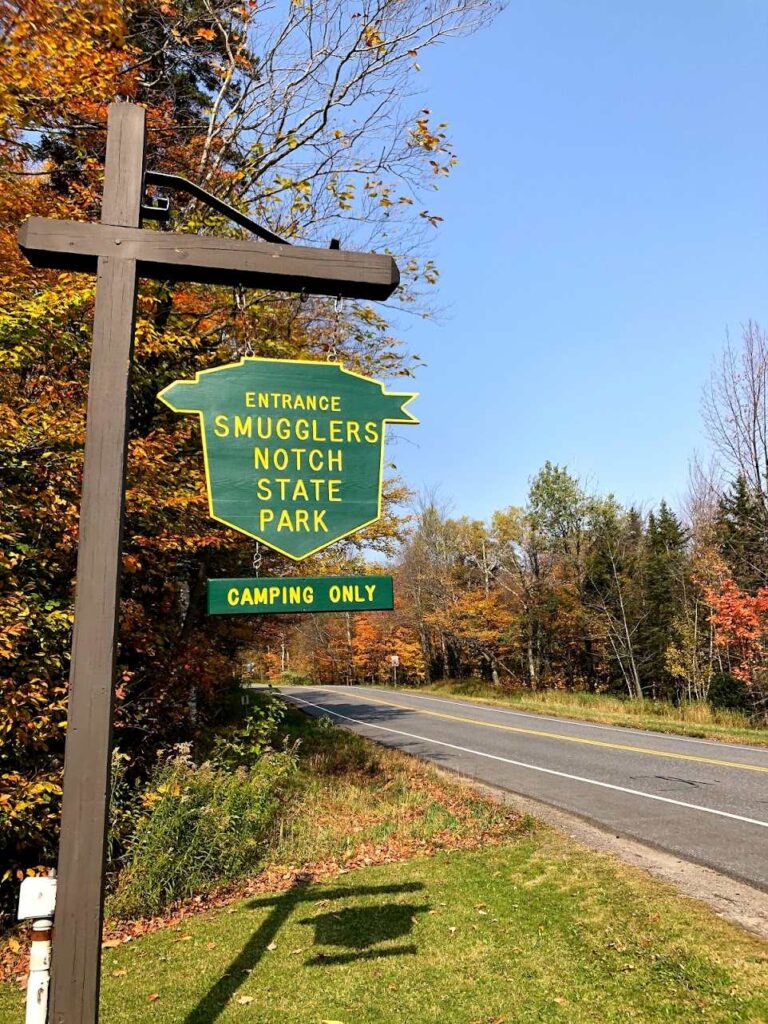
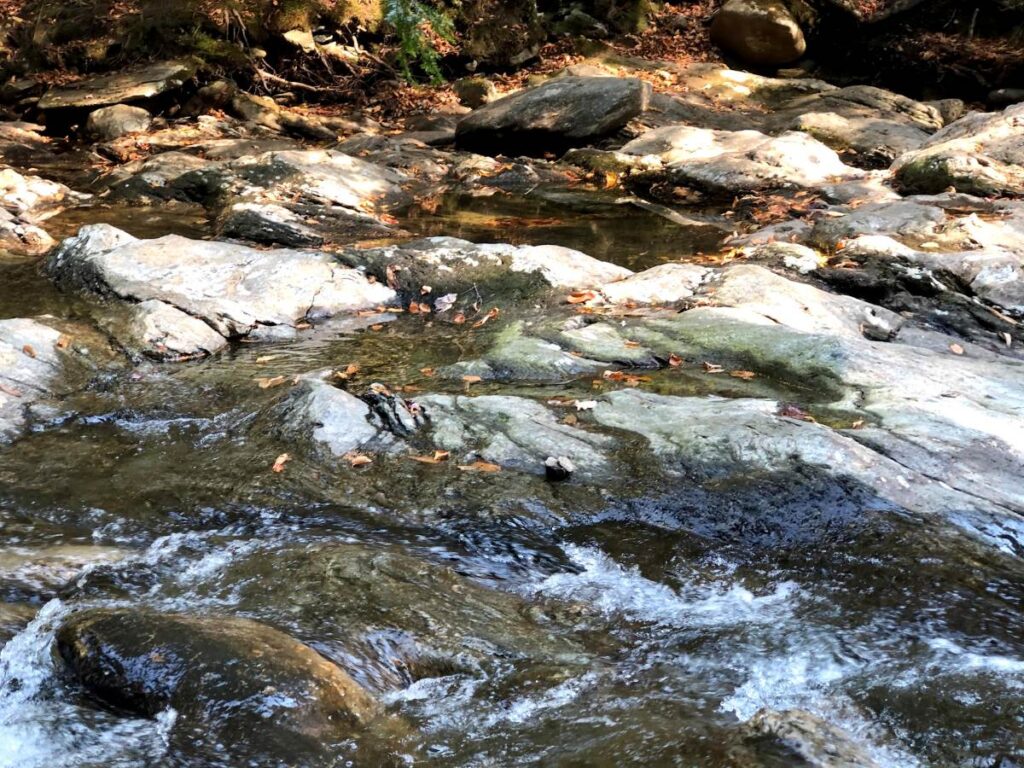
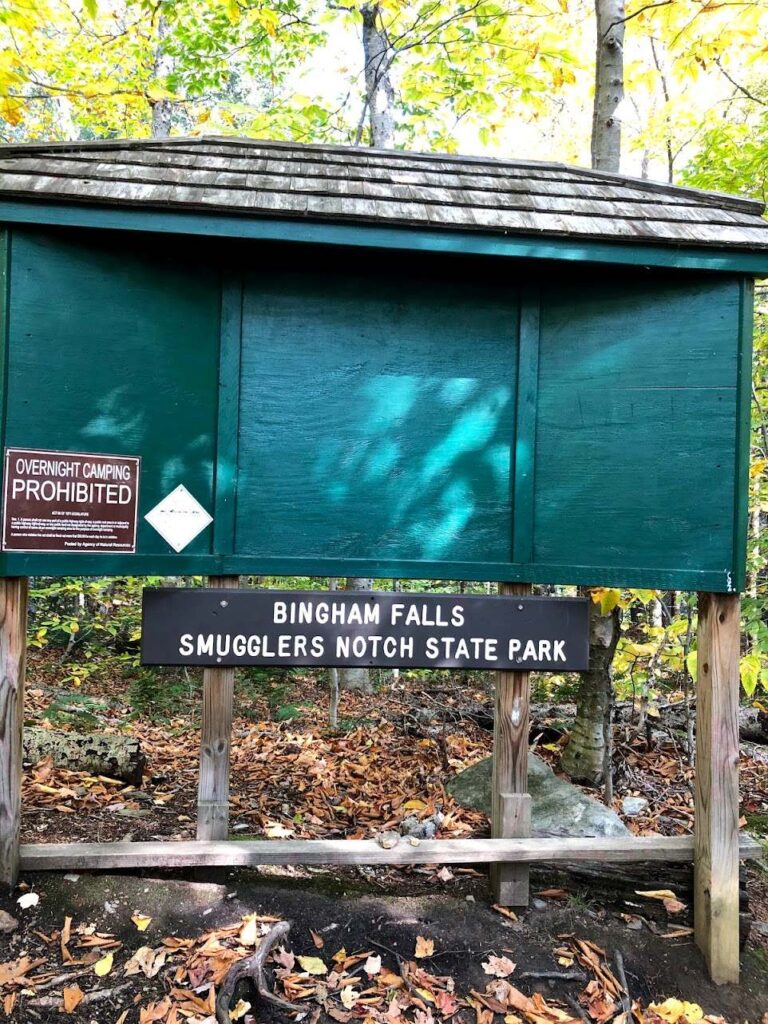
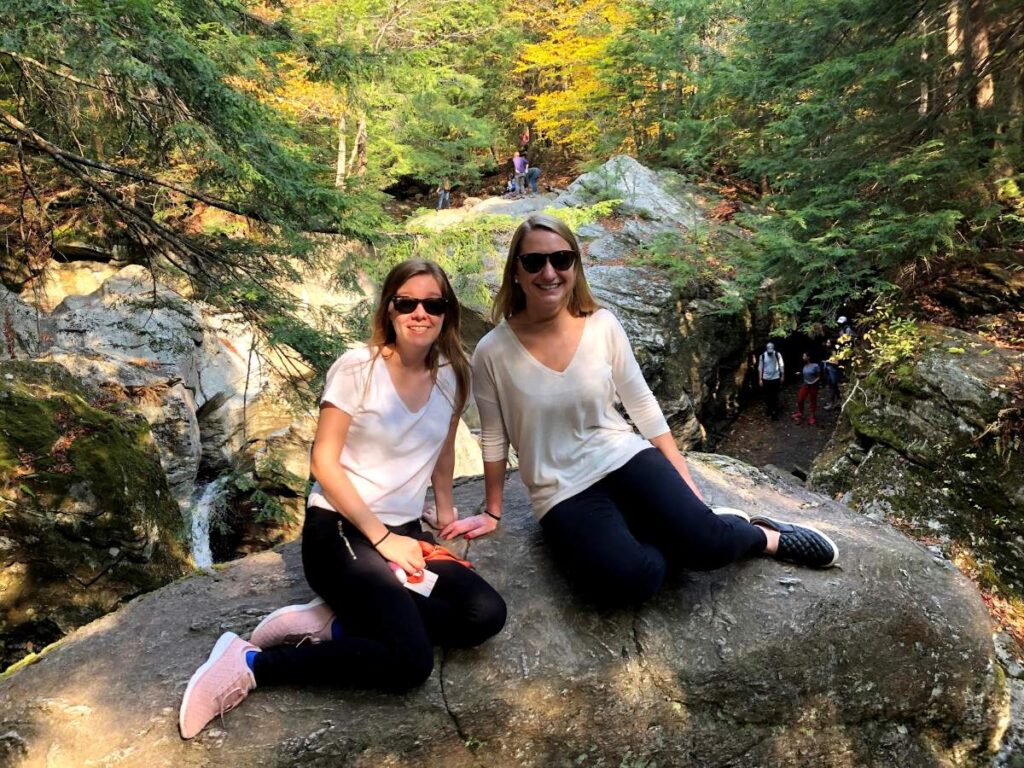
Keep in mind that the road through Smugglers’ Notch is seasonal and closes when winter conditions arrive, so check the current road status if you’re planning a later fall trip. Smugglers’ Notch and Stowe also work really well together, so you don’t necessarily need separate accommodations for both.
Where to stay near Smugglers’ Notch:
- Smugglers’ Notch Resort: If you want to stay on the Jeffersonville side of the Notch, the resort puts you right in the surrounding mountain scenery.
- Sterling Ridge Resort: Also in Jeffersonville, this is a more unique option featuring individual cabins rather than traditional hotel rooms, which could be especially fun for a fall getaway.
Stowe
Continue through the mountains toward Stowe, one of Vermont’s most famous fall destinations. This was one of the places I was most excited to see because Stowe is practically synonymous with Vermont fall travel, and it definitely has the classic New England atmosphere people come looking for.
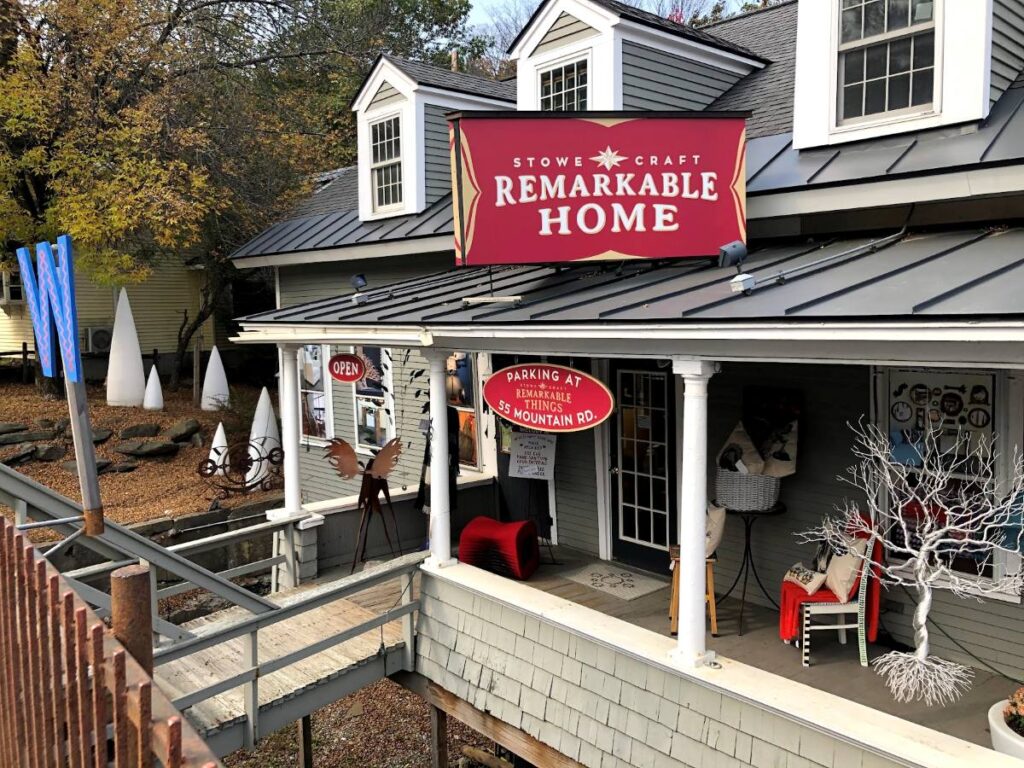
Stowe Village itself is worth spending time exploring, with historic buildings, local shops and the famous white church set against the mountains. However, I wouldn’t make the mistake of only seeing downtown Stowe. The scenery surrounding the village is a huge part of what makes the area special, particularly during foliage season, so leave yourself enough time to drive around and enjoy the surrounding mountains.
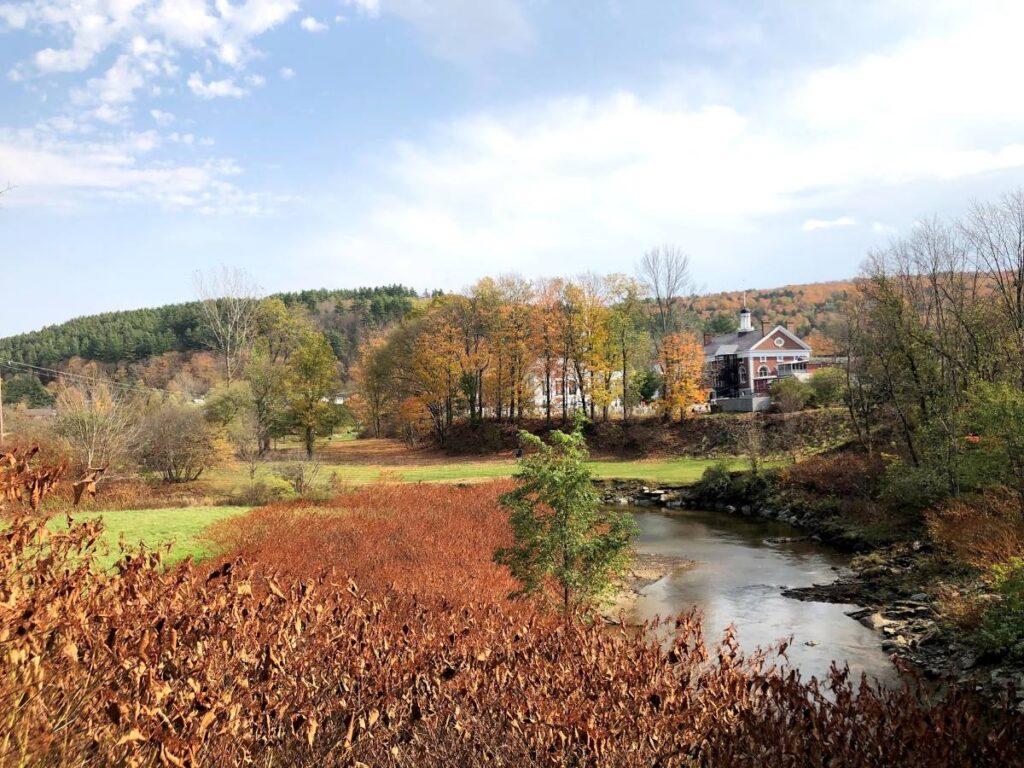
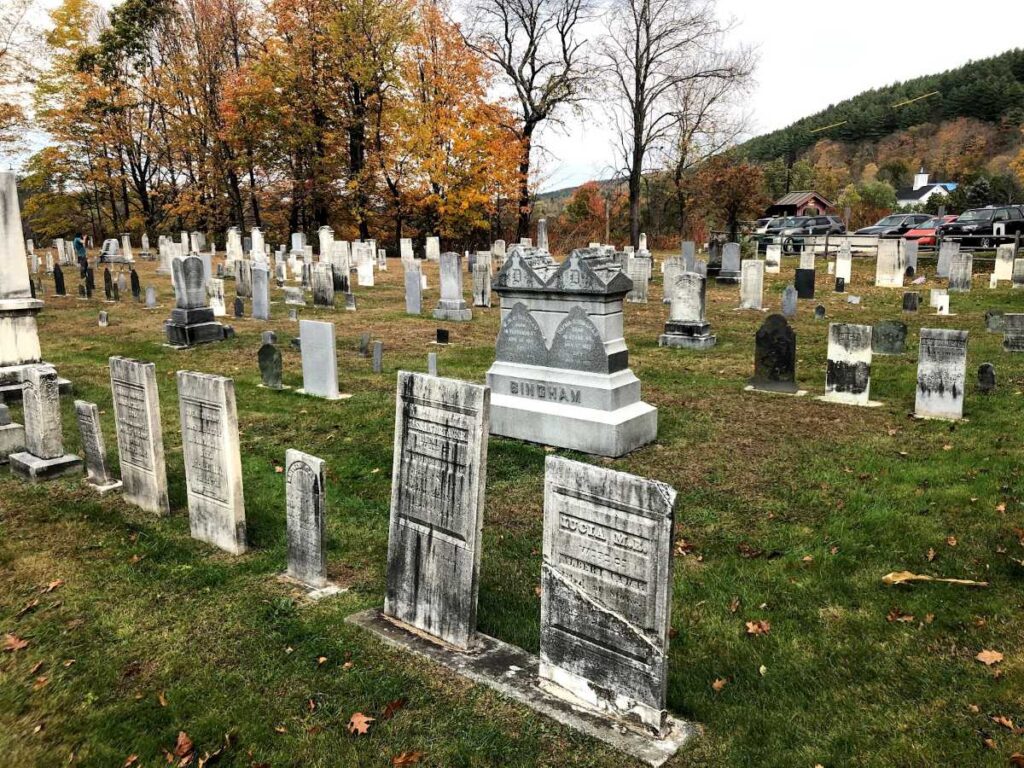
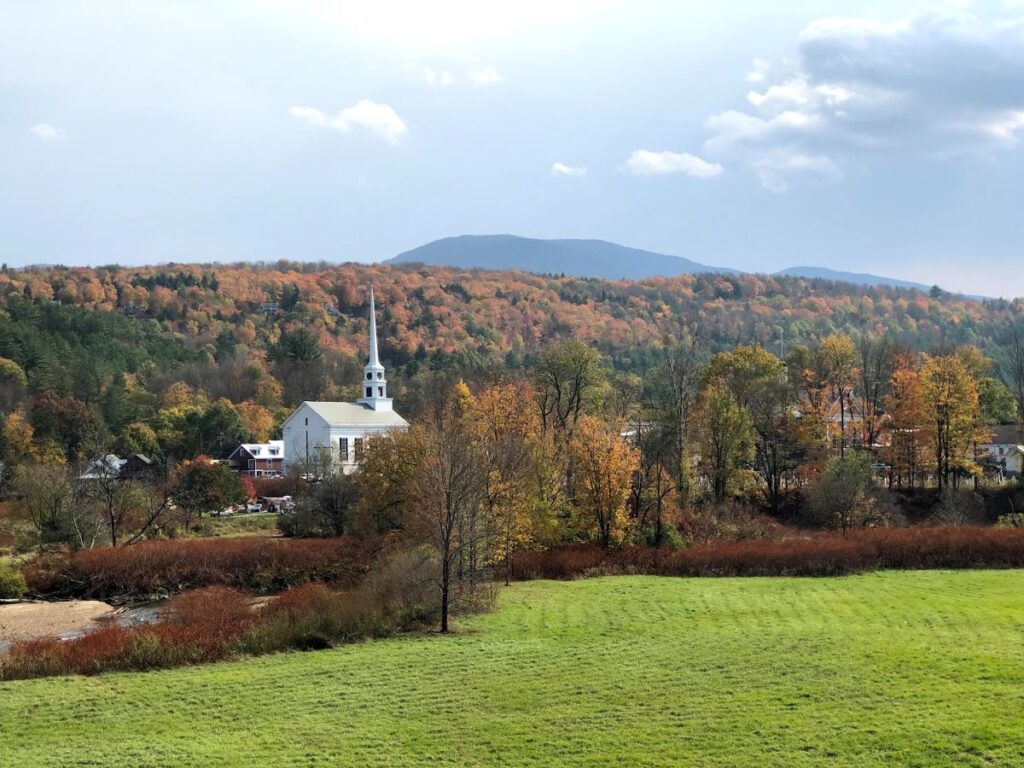
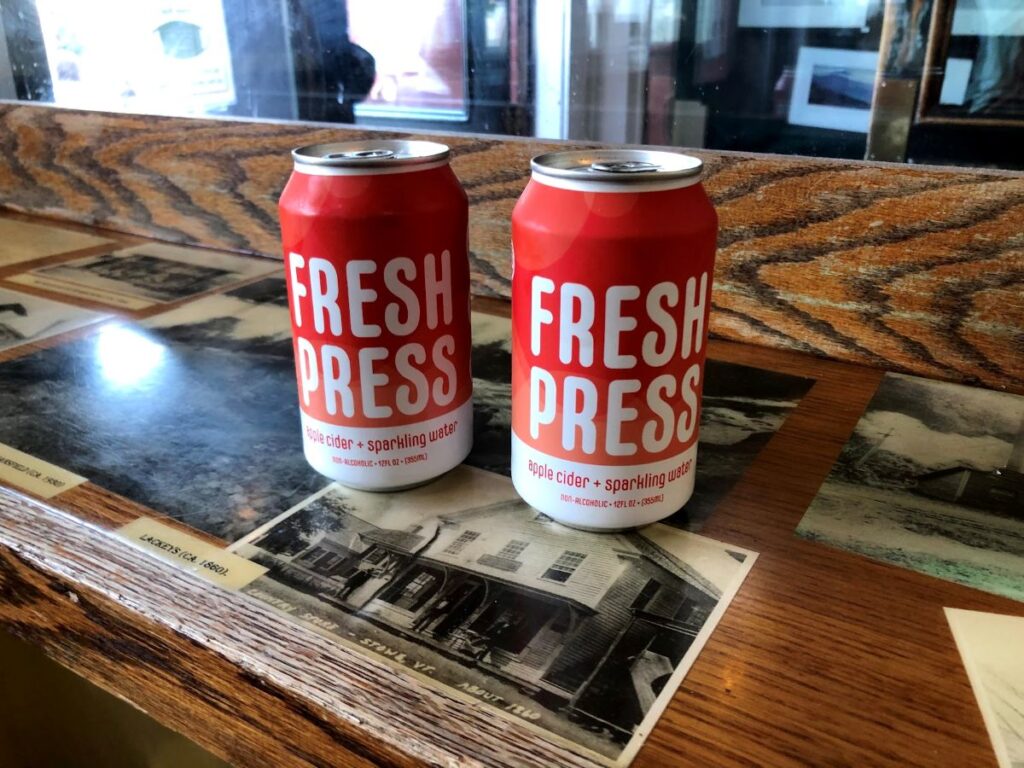
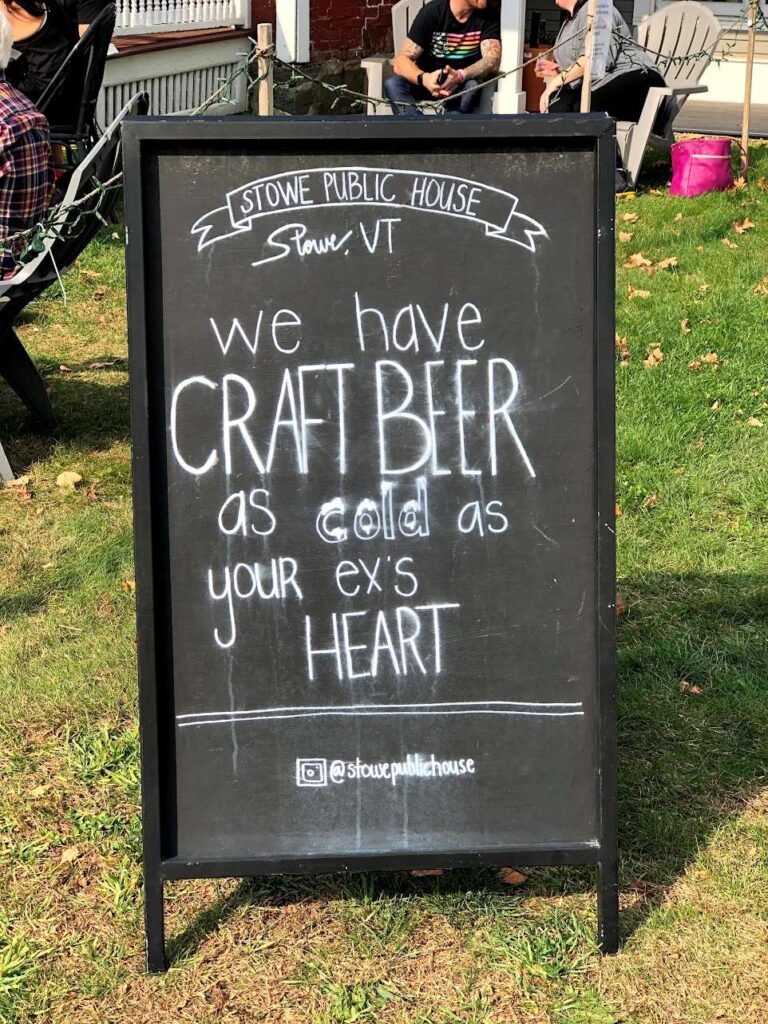
Stowe is also somewhere I wouldn’t rush. Instead of arriving, taking a few photos and immediately moving on, consider spending at least a night or two here if your itinerary allows. It gives you time to experience the village, explore the surrounding area and enjoy the mountain scenery without trying to squeeze everything into a few hours. There are a lot of great restaurants and places to visit – be sure to get a cider!
Where to stay in Stowe:
- Green Mountain Inn: Located right in Stowe Village, this historic inn dates back to the 1800s and puts you within walking distance of shops and restaurants. It’s a popular option, but the history and location make it especially fitting for a Vermont fall trip.
- Brass Lantern Inn: A smaller bed-and-breakfast outside the center of the village with views toward Mount Mansfield. This could be a good option if you’re looking for more of a cozy Vermont inn experience while still staying close to Stowe.
Quechee
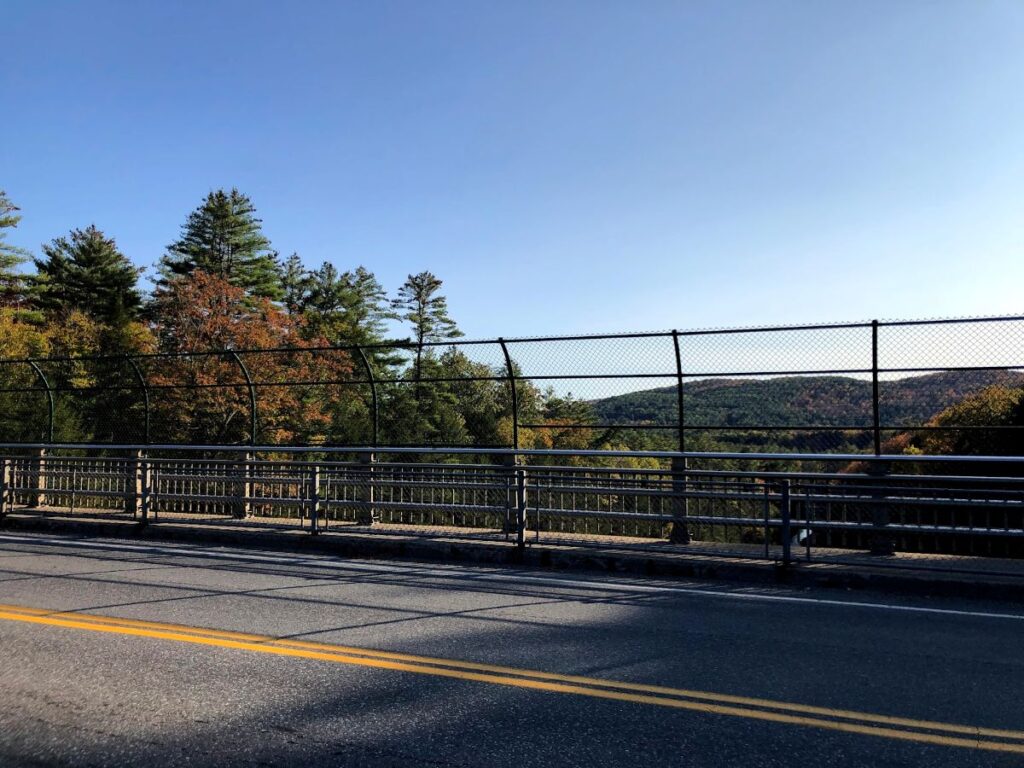
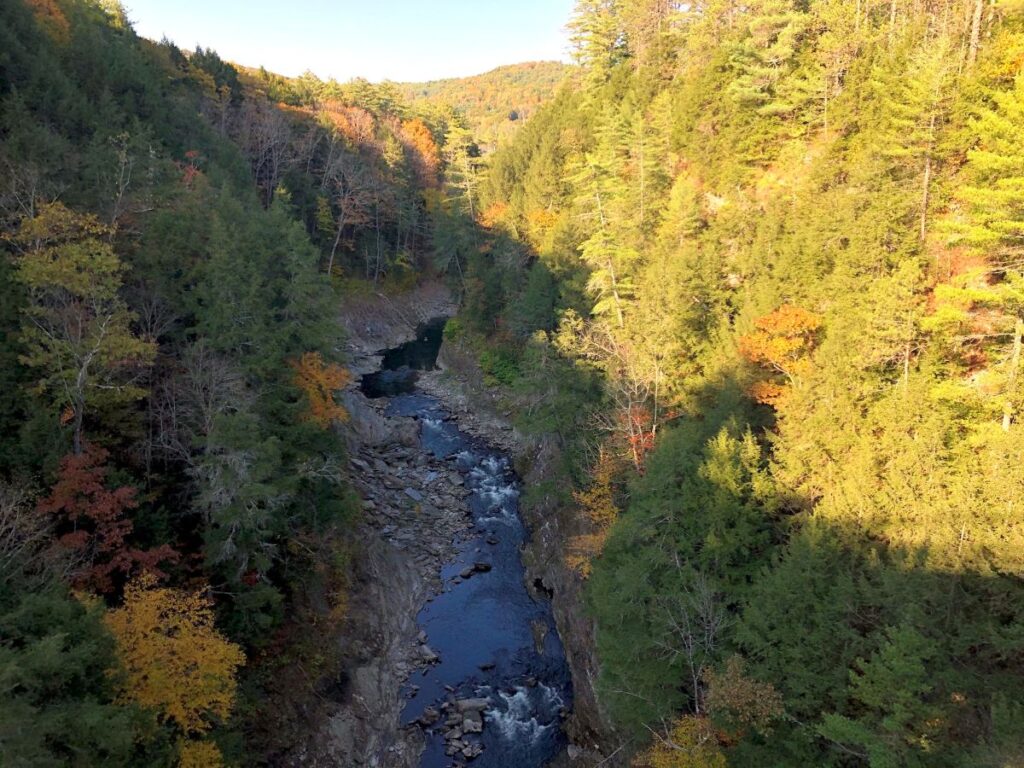
Continuing south, make your way toward Quechee. One of the biggest reasons to visit is Quechee Gorge, a dramatic gorge carved by the Ottauquechee River. You can take in the scenery from above, and there are also trails in the surrounding area if you want to spend more time exploring.
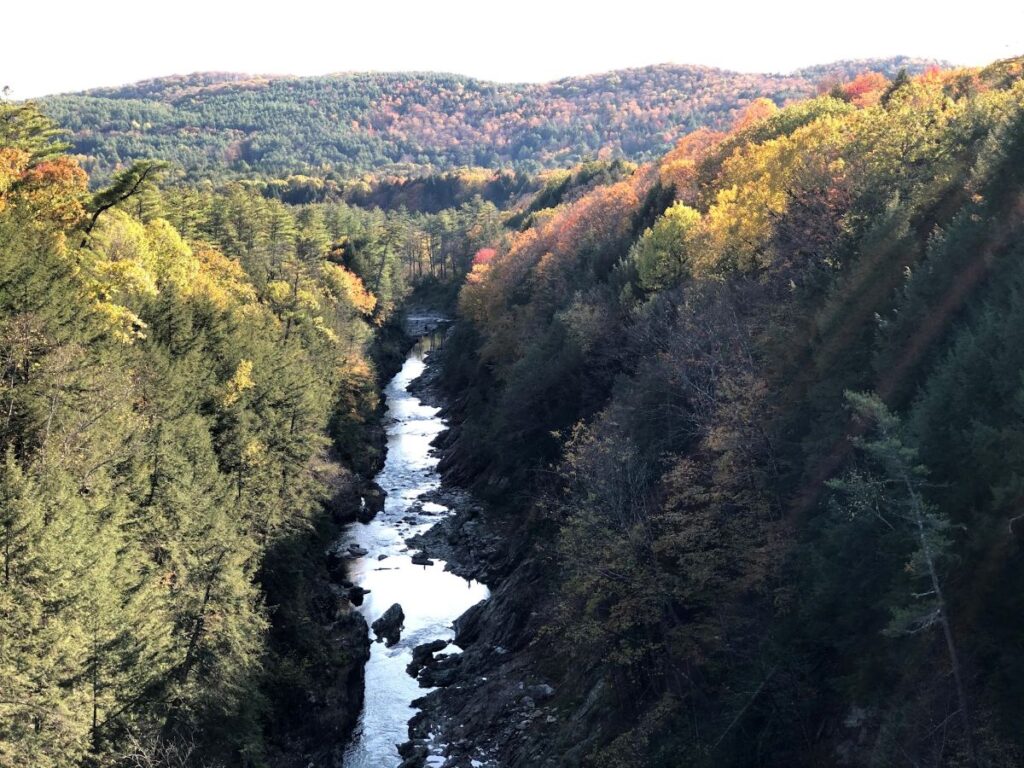
Another easy stop is the Quechee Covered Bridge, giving you another dose of the classic New England scenery Vermont is known for. Between the river, gorge, bridge and surrounding foliage, Quechee is worth adding to your route without necessarily needing to dedicate an entire day to it.
Quechee is also very close to Woodstock, so the two destinations work particularly well together. If you’re trying to avoid constantly packing and unpacking, I’d choose either Quechee or Woodstock as your base and explore both from there.
Where to stay in Quechee:
- The Quechee Inn at Marshland Farm: A historic country inn that fits the atmosphere of a fall trip through Vermont, particularly if you’d prefer something with more character than a traditional hotel.
- Align Inn Vermont: A more casual option near Quechee Gorge that could work well if location and convenience are your priorities.
Woodstock
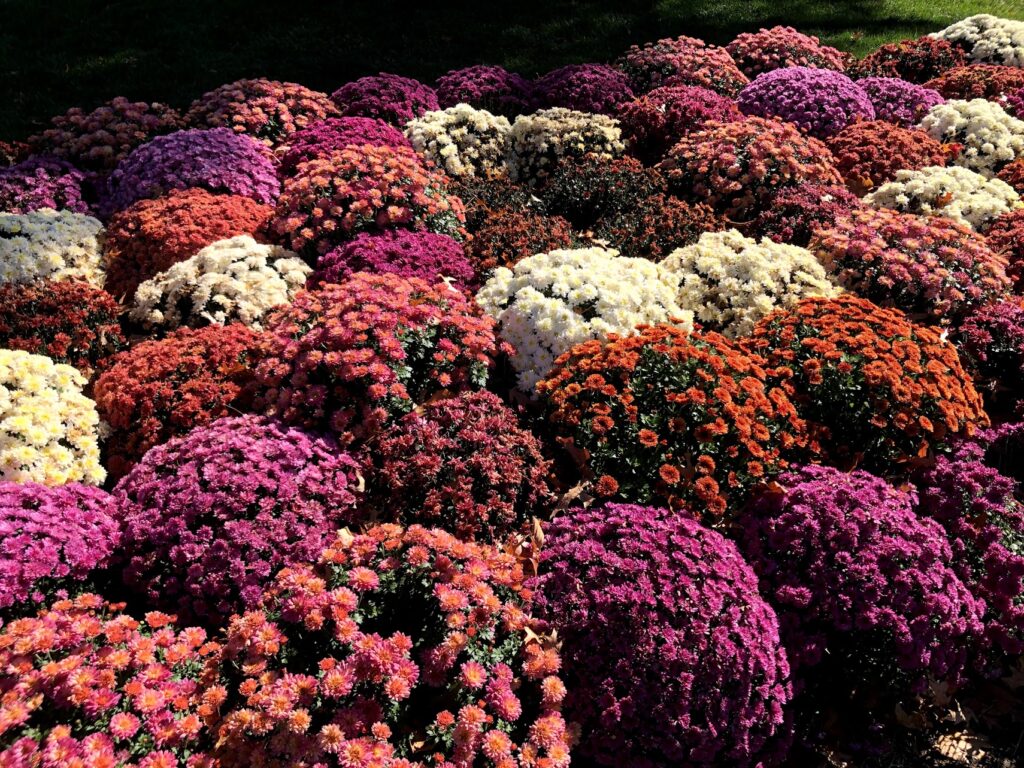
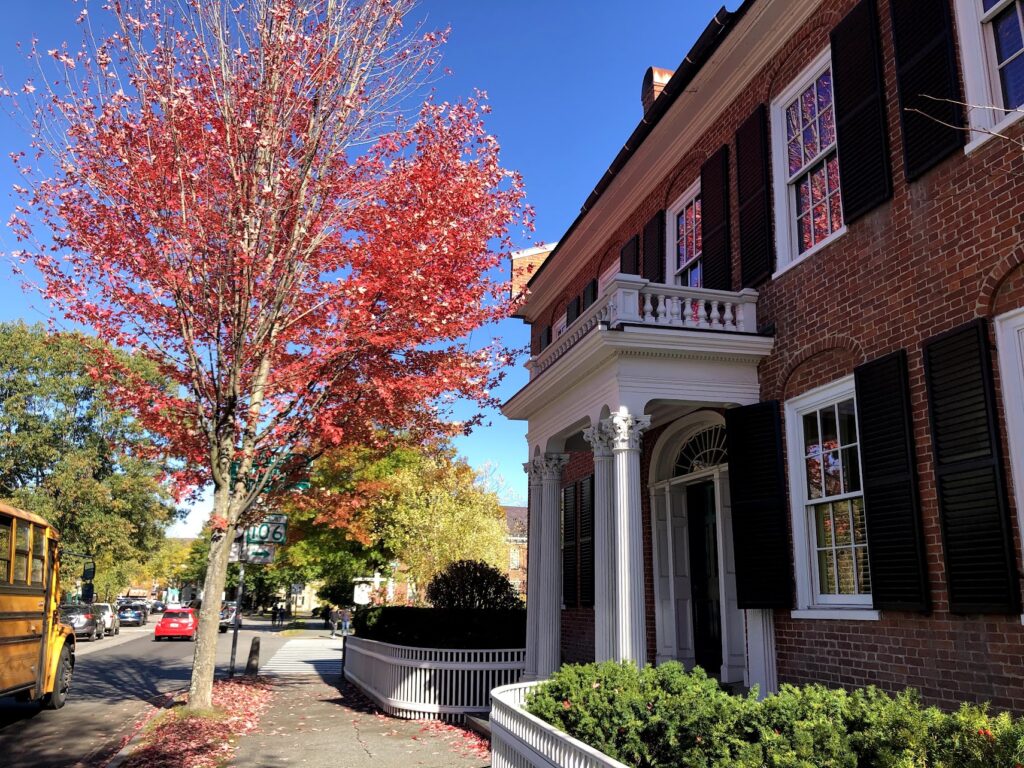
Not far from Quechee is Woodstock, which was exactly the type of place I pictured when I imagined Vermont in the fall. The historic downtown is filled with beautiful New England architecture, local shops and restaurants, while the surrounding hills add plenty of fall scenery. It’s also compact enough that you can park and spend some time exploring on foot instead of constantly getting back into the car.
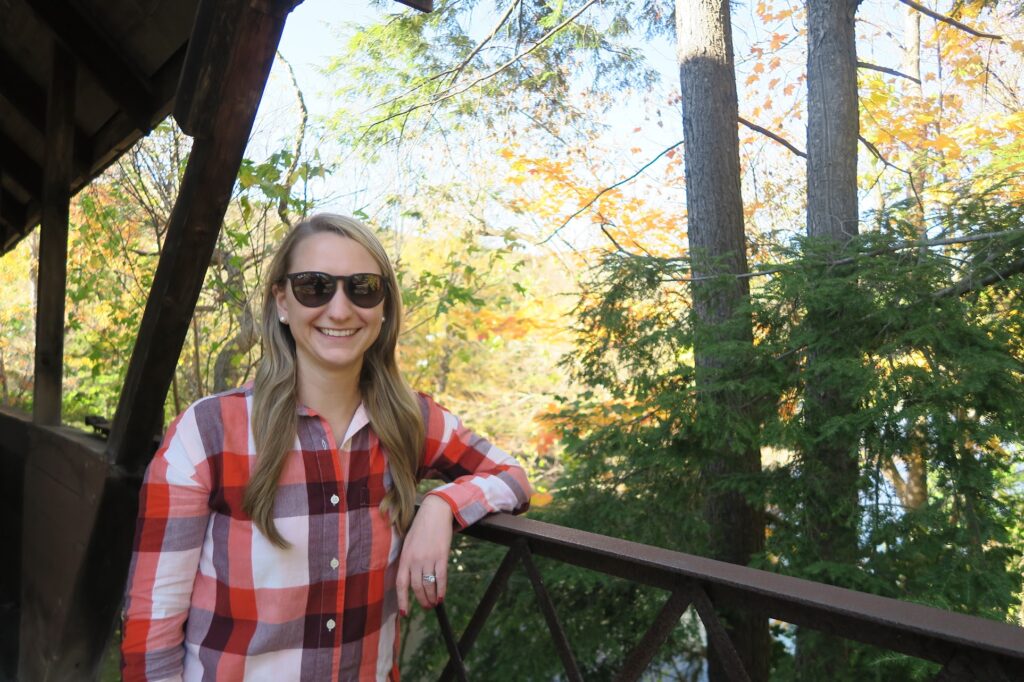
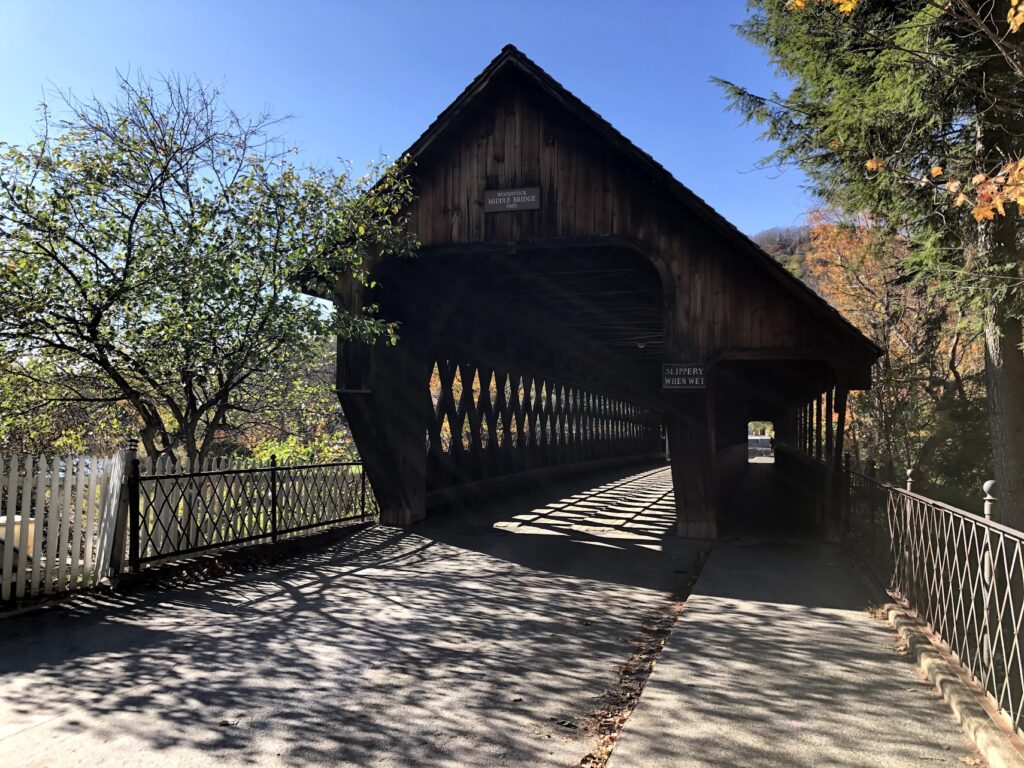
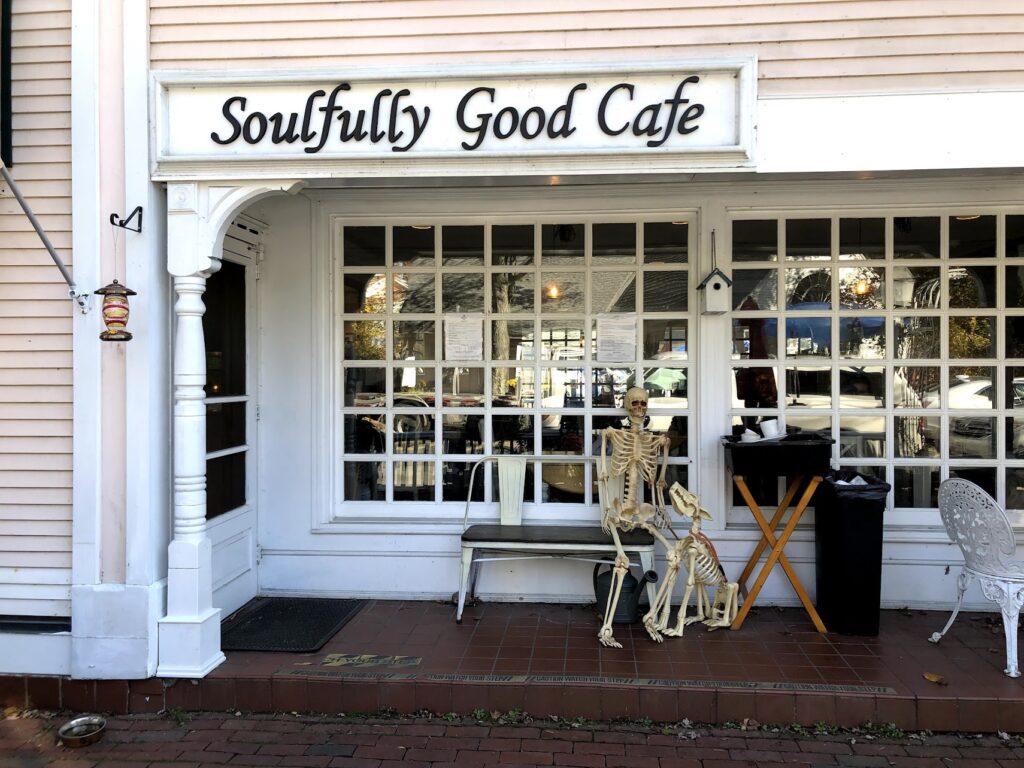
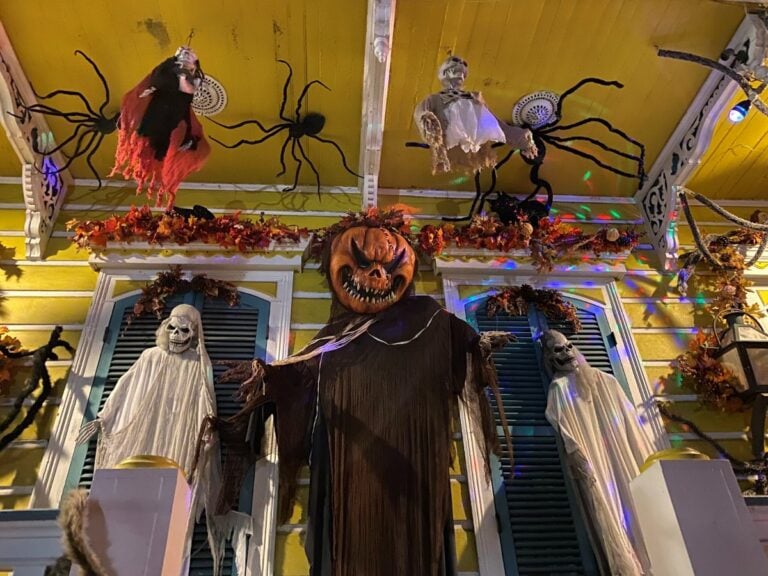
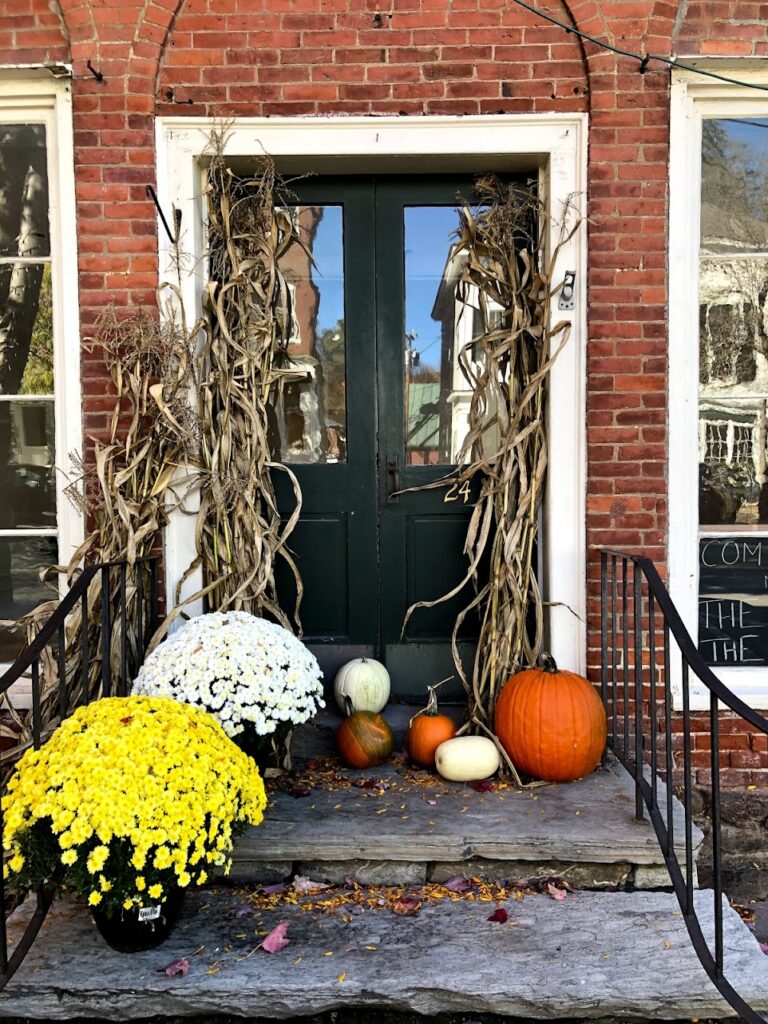
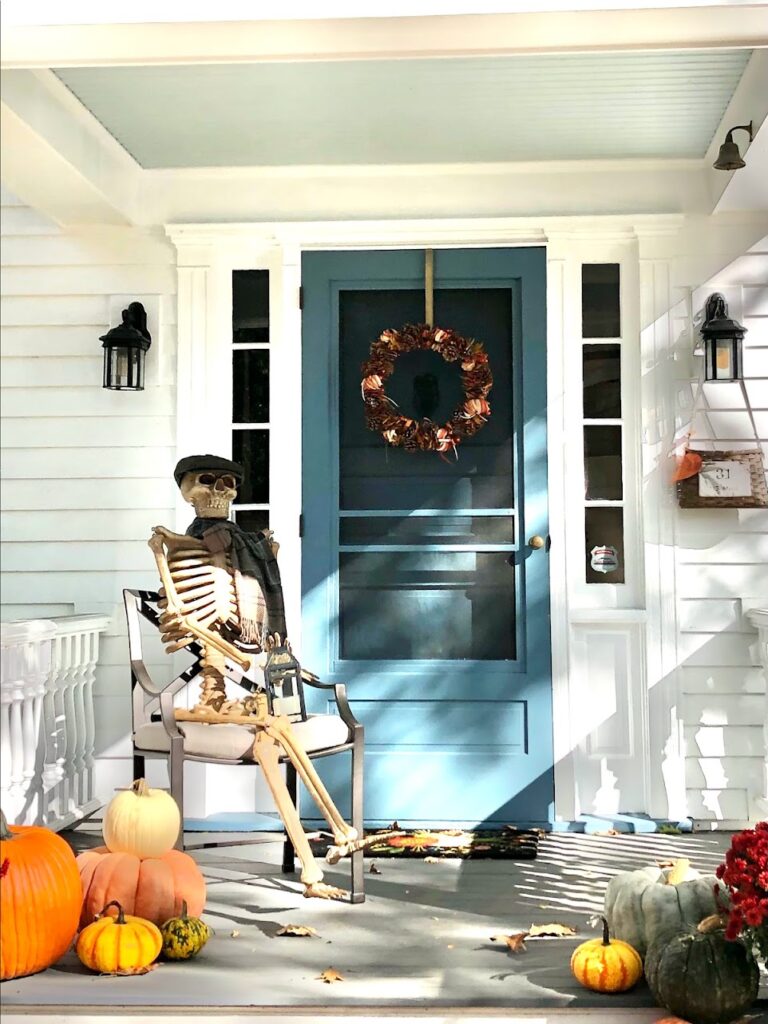
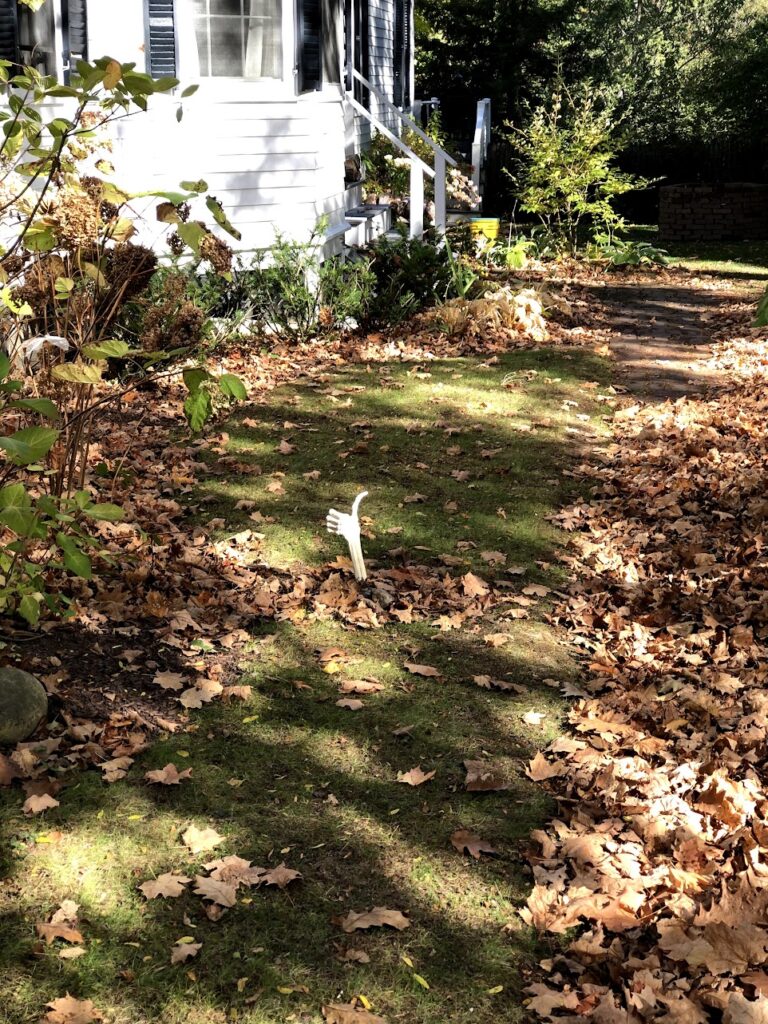
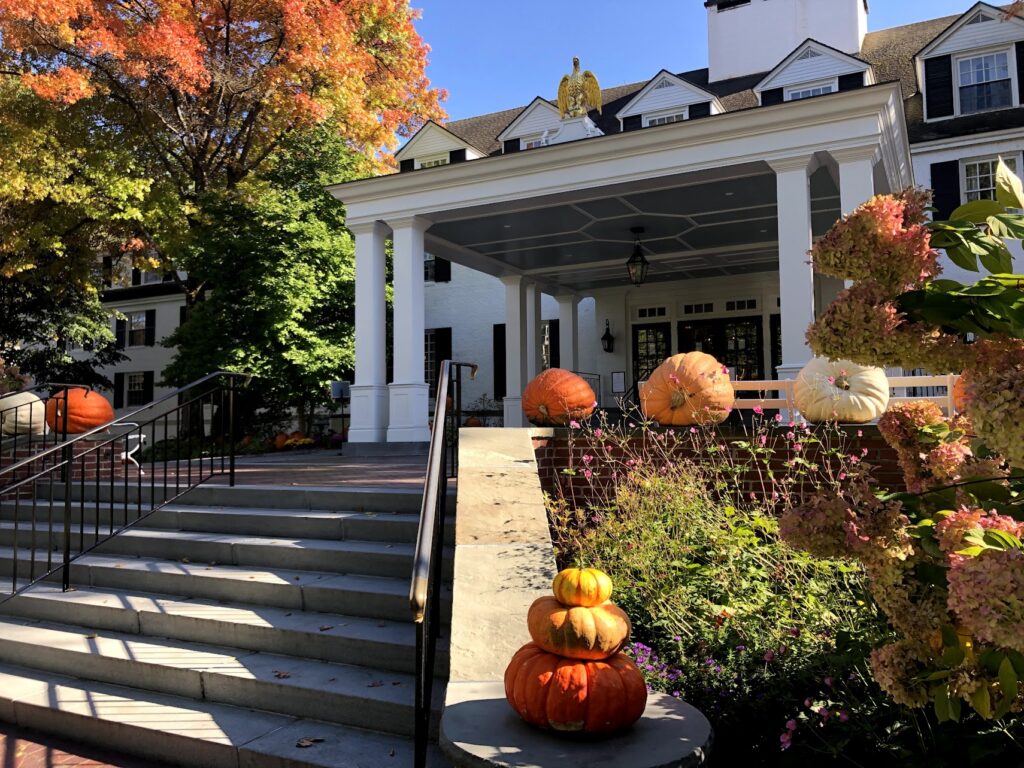
One of the most recognizable spots in town is the Middle Covered Bridge, which crosses the Ottauquechee River right near the center of Woodstock. But Woodstock isn’t really a place where you need to race from attraction to attraction. Part of the reason to visit is simply to walk around, explore the shops, admire the historic buildings and enjoy being in a quintessential Vermont town during fall. We loved looking at the big houses and their Halloween decorations.
Woodstock is extremely popular during foliage season, particularly on weekends. If you can, arrive earlier in the morning so you have some time to explore before town gets busier. If your schedule allows for a weekday visit, that can also help you avoid some of the biggest fall crowds.
Where to stay in Woodstock:
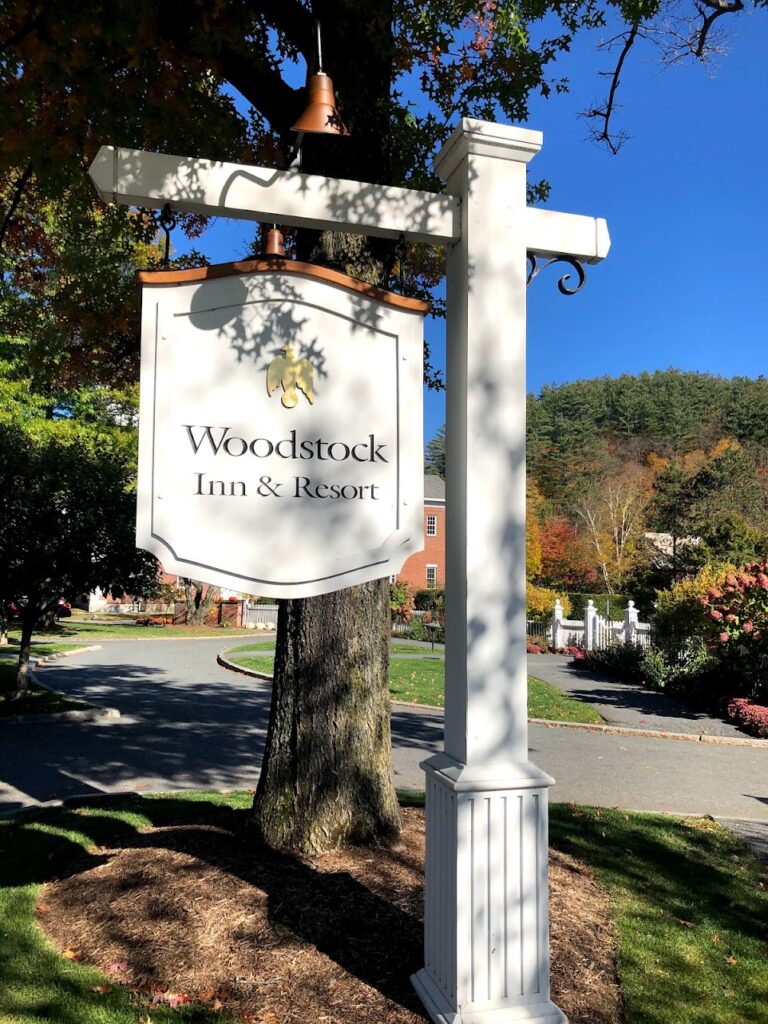
- Woodstock Inn & Resort: Probably the most iconic place to stay in Woodstock, the resort sits right on the Village Green in the center of town. It’s definitely more of a splurge, but its location makes it easy to explore downtown Woodstock on foot.
- 506 On the River Inn: Located just outside downtown along the Ottauquechee River, this is another option if you want to stay near Woodstock while having a little more distance from the busiest part of town.
Sleepy Hollow Farm and Pomfret
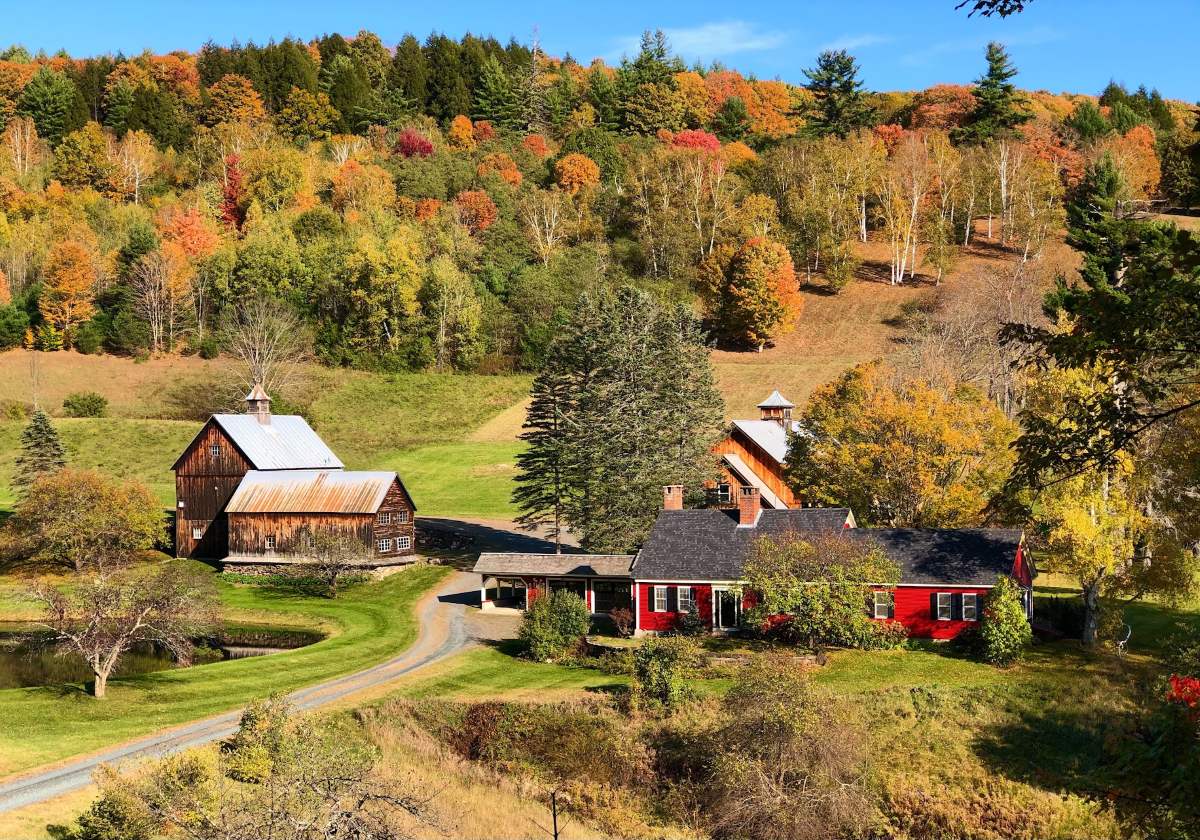
While you’re exploring the Woodstock area, you may also recognize Sleepy Hollow Farm in nearby Pomfret. It has become one of the most photographed scenes in Vermont, with a winding country road leading toward the farm surrounded by rolling hills and trees. We were able to see it during our trip, and it’s easy to understand why the view became so popular.
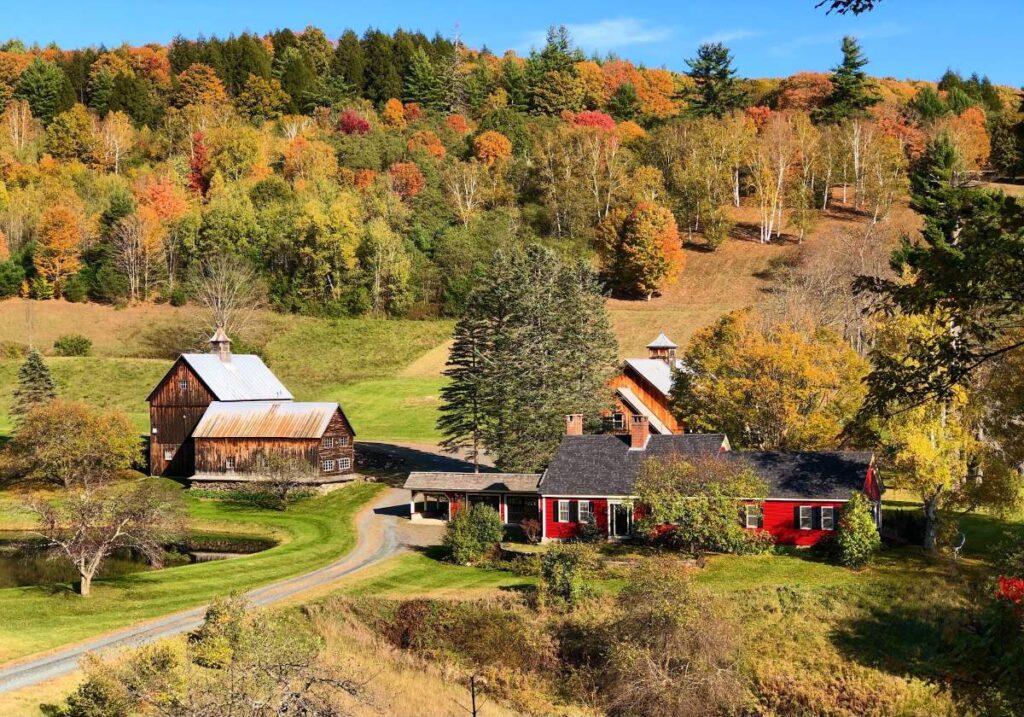
However, this is one stop where visiting today can be very different from when we went. Sleepy Hollow Farm is privately owned, and the huge increase in visitors trying to recreate the famous photo has caused traffic, parking and trespassing problems for the surrounding community. In recent fall seasons, local officials have restricted non-local vehicle access on portions of Cloudland Road during peak foliage.
If Sleepy Hollow Farm is somewhere you’re hoping to see, check the current rules from Woodstock and Pomfret before your trip rather than relying on an old blog post, social media video or map. Always respect road closures and private property. There are endless beautiful fall views throughout Vermont, and no photo is worth trespassing or creating problems for the people who actually live there.
Because Pomfret is so close to Woodstock, there’s no reason to change accommodations specifically for this stop. Stay in the Woodstock area and explore the surrounding area while you’re there.
Dorset
As you continue into southern Vermont, consider adding Dorset to your route. This is one of the places on the list that Sandy and I experienced during a different trip when we traveled to the area for a wedding in June, so our photos from Dorset have considerably more summer greenery than fall foliage.
Even without the fall colors, we thought Dorset was beautiful. It’s considerably smaller and quieter than many of the better-known destinations on this list, with historic buildings, mountain scenery and the peaceful New England atmosphere you hope to find in a small Vermont town. After seeing how pretty the area was in June, I can only imagine what the surrounding landscape looks like once the leaves start changing.
Dorset is also close enough to Manchester that you can easily experience both while staying in the same area. If you’re looking for somewhere quieter to end your road trip rather than staying directly in one of Vermont’s more popular tourist destinations, Dorset is definitely worth considering.
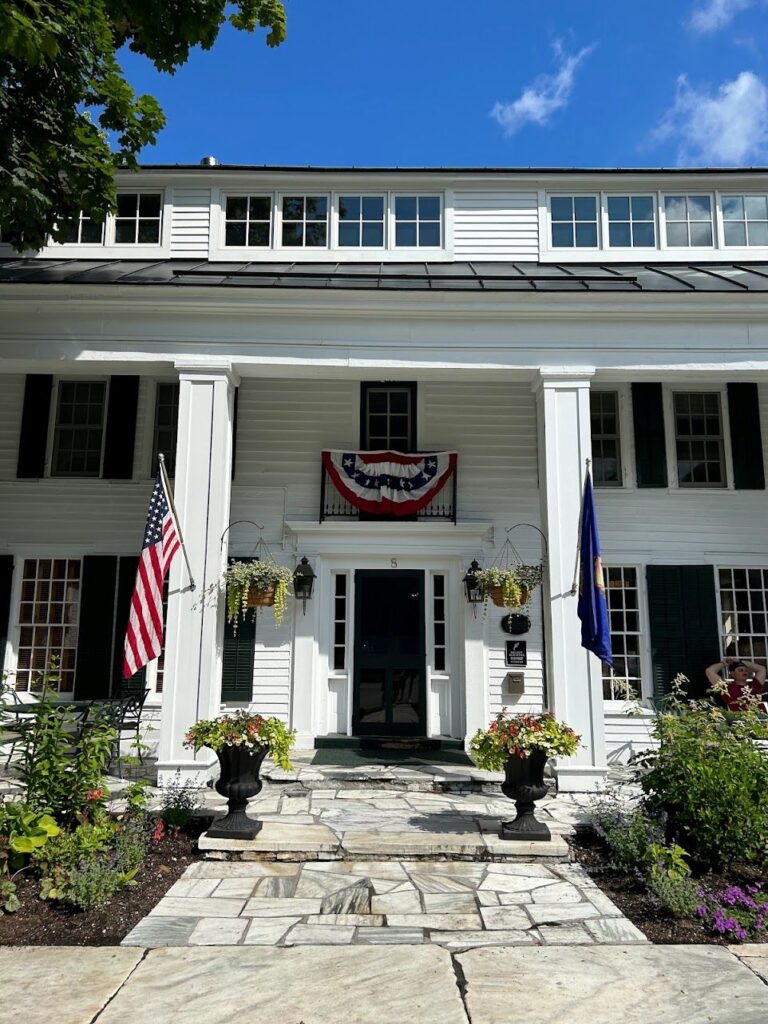
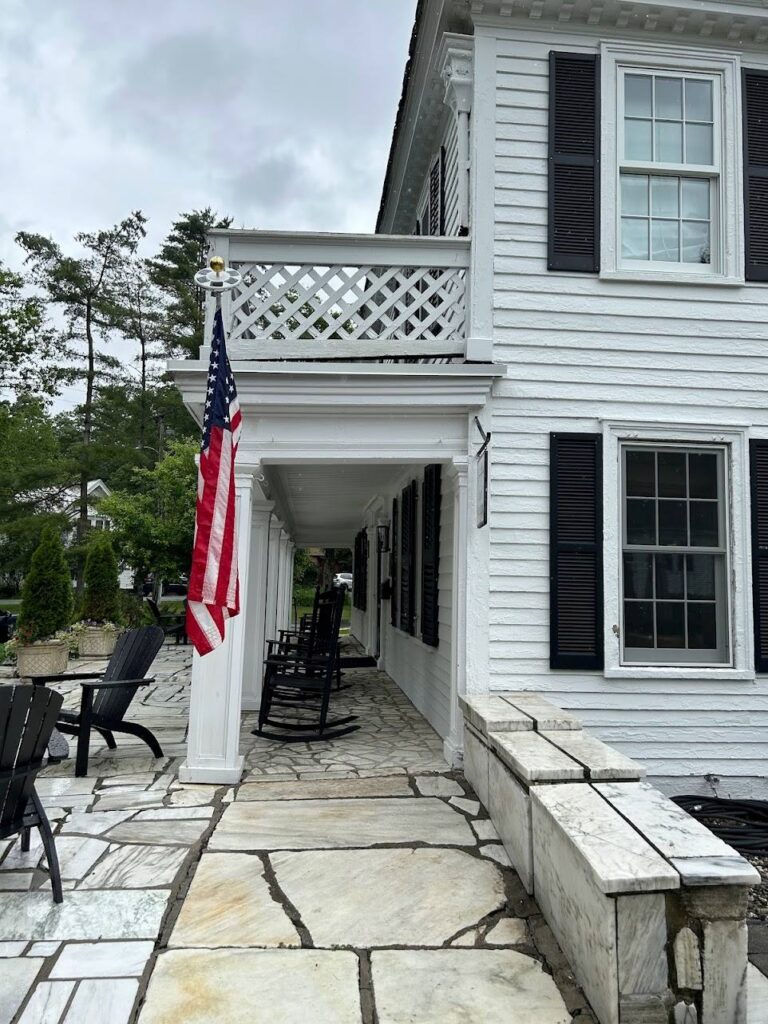
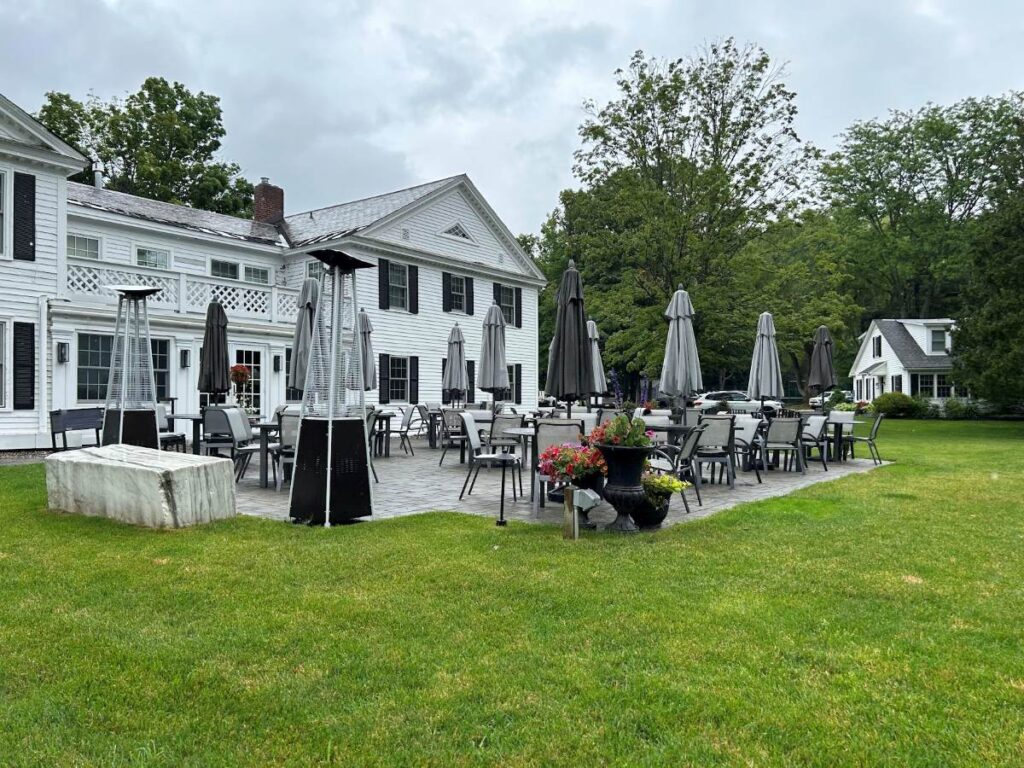
Where to stay in Dorset:
- The Dorset Inn: This is one accommodation on this list we can personally recommend because we actually stayed here during our June trip. The historic inn was beautiful and had exactly the type of classic Vermont atmosphere you’d hope for in a small town. There’s dining right at the inn, which was incredibly convenient, along with other dining options nearby. We would absolutely consider staying here again.
Manchester
Finish your north-to-south Vermont road trip in Manchester, another place Sandy and I visited during our June trip for the wedding. While we haven’t personally experienced Manchester surrounded by fall foliage, it was already beautiful during the summer, and with the mountains surrounding the area, I can only imagine how pretty it becomes in the fall.
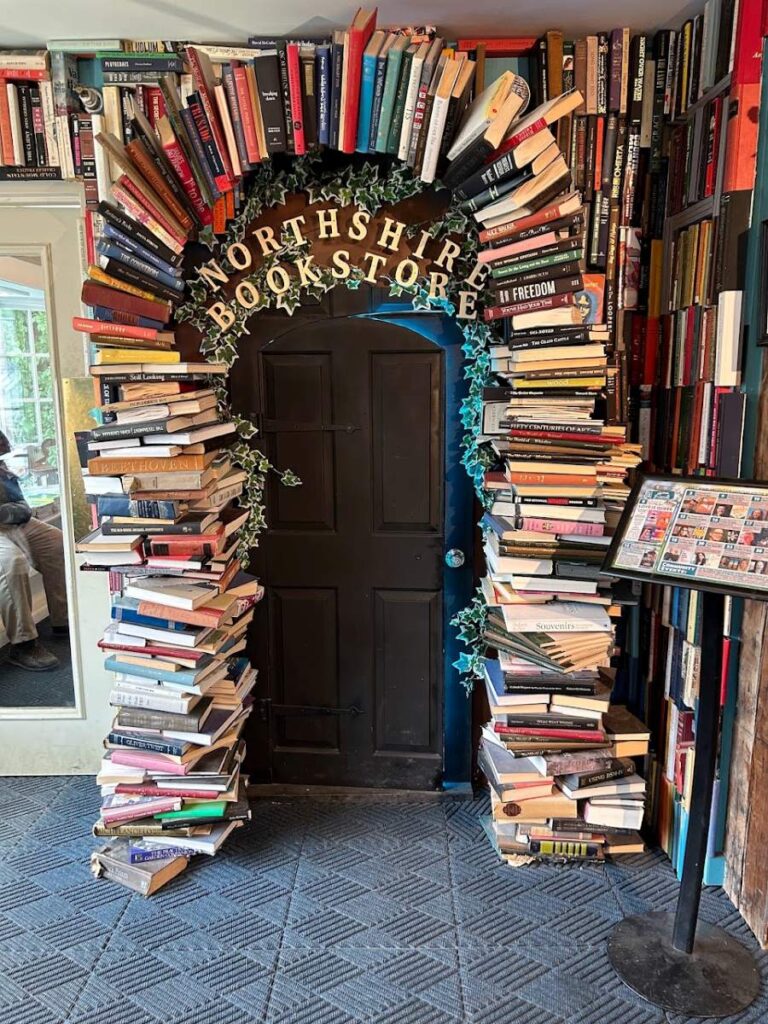
Manchester gives you a mix of historic New England charm, mountain scenery, restaurants and shopping. We loved the local bookstore! One of the best-known attractions in the area is Hildene, the Lincoln Family Home, which was the summer home of Robert Todd Lincoln, the only child of Abraham and Mary Todd Lincoln to survive to adulthood.
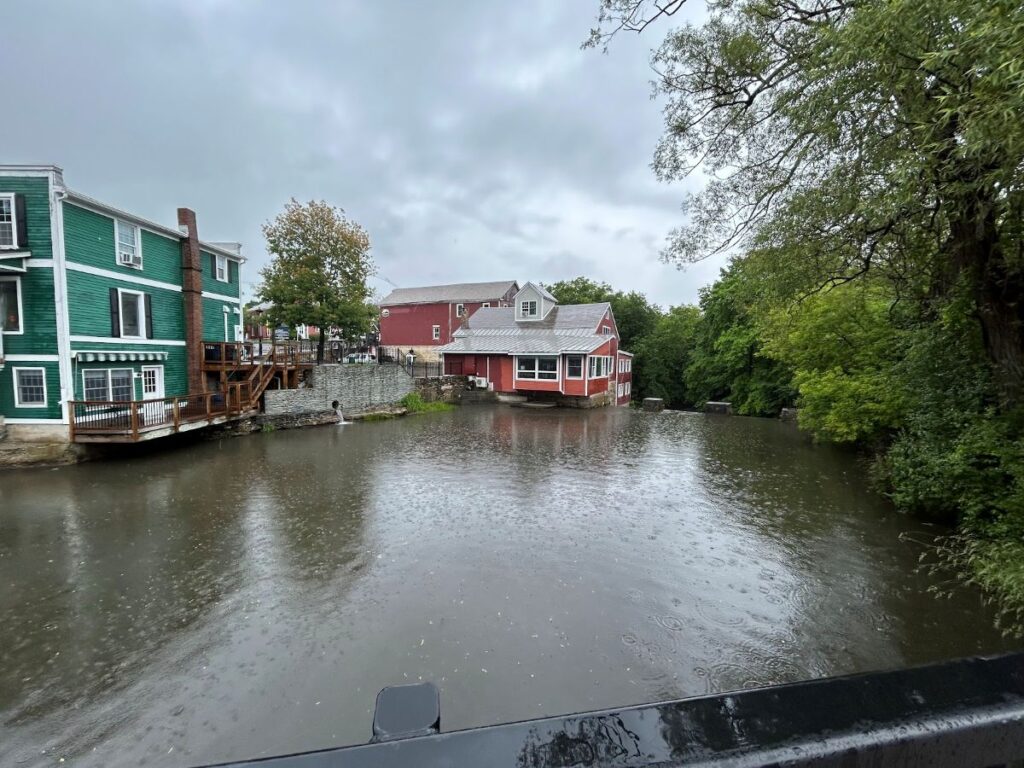
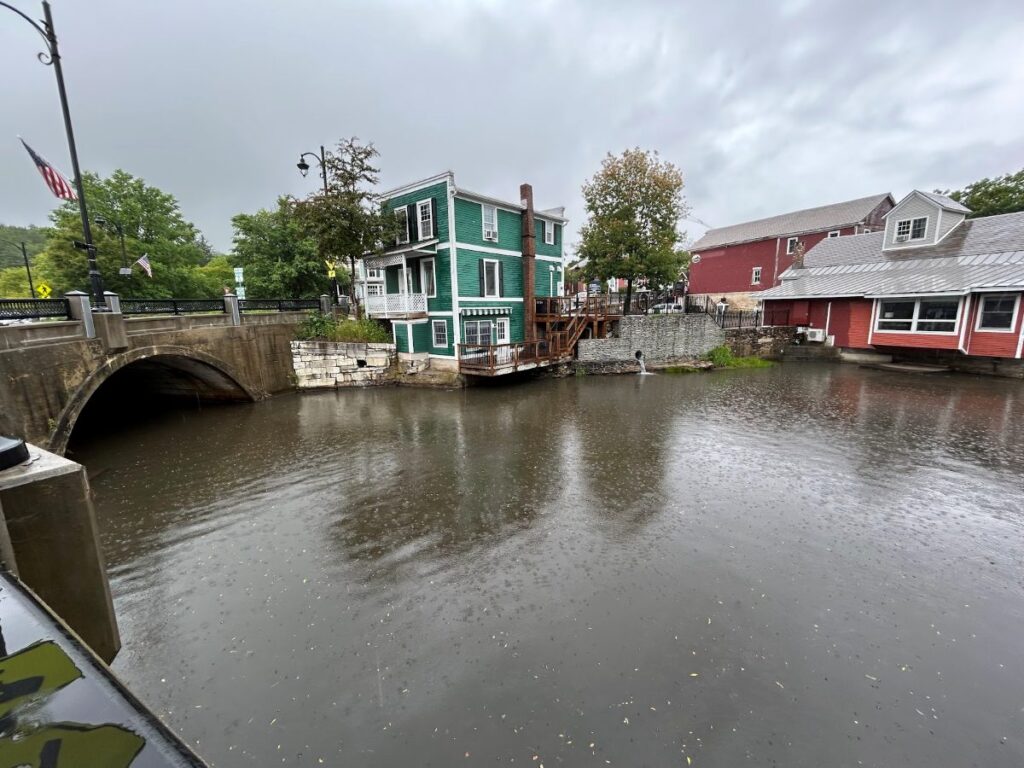
Because Manchester is one of the larger destinations in southern Vermont, it makes a natural place to finish this itinerary. You can spend some time exploring the area before heading home or continue your trip farther south into New England depending on where you’re going next.
Where to stay in Manchester:
- The Inn at Manchester: A historic inn near Manchester Village that could be a good option if you’re looking for a traditional New England atmosphere.
- Kimpton Taconic Hotel: A larger boutique option near Manchester Village if you prefer more hotel amenities while still staying close to restaurants, shops and attractions.
You could also stay at The Dorset Inn and visit Manchester from there, which is what we’d personally consider after enjoying our stay in Dorset.
The Best Route for a Vermont Fall Road Trip
For this guide, we’ve intentionally worked our way from northern Vermont to southern Vermont:
Burlington → Colchester Causeway Trail → Smugglers’ Notch → Stowe → Quechee → Woodstock/Pomfret → Dorset → Manchester
You can absolutely reverse the route depending on where you’re coming from, but organizing the trip geographically keeps you from unnecessarily driving back and forth across the state.
You also don’t need to change hotels at every stop. Burlington can serve as your base for both the city and Colchester. Stowe works well for exploring Stowe and Smugglers’ Notch. Woodstock or Quechee can cover that portion of the trip, while Dorset or Manchester makes a good base for southern Vermont.
For a road trip covering everything on this list, I’d give yourself at least five or six days, and longer if you prefer slower travel. If you have less time, don’t try to squeeze everything in just to check places off a list. Pick a few areas and actually enjoy them. Part of the appeal of driving through Vermont in the fall is having enough time to stop when you see something beautiful or discover somewhere you hadn’t originally planned to visit.
When Is the Best Time to See Fall Foliage in Vermont?
Unfortunately, there’s no single weekend that guarantees you’ll see all of Vermont at peak foliage. The timing varies every year depending on the weather, elevation and location, and northern Vermont and higher elevations generally begin changing before areas farther south.
Late September through the first couple weeks of October is generally the timeframe to watch. If I were planning another road trip covering several parts of Vermont, I’d personally look toward early October and then start closely watching foliage reports as the trip approaches.
That’s also why I wouldn’t get too hung up on achieving the “perfect” foliage trip. We were a little past peak in many of the places we visited because we simply couldn’t travel the weekend before. Would I have loved every tree to be at absolute peak color? Of course. But Vermont was still beautiful, and we still had an incredible road trip. Sometimes you have to plan around real life rather than the leaves.
Tips for Visiting Vermont in the Fall
Fall is an incredibly popular time to visit Vermont, so book your accommodations as early as possible, particularly if you’re traveling over a weekend. Places like Woodstock and Stowe can get especially busy during foliage season, and waiting until the last minute can leave you with fewer choices or much higher prices.
I’d also recommend starting your days relatively early. Not only can this make parking easier in some of the more popular towns, but it gives you more time to enjoy the places you’re visiting before the biggest crowds arrive. At the same time, don’t schedule every hour of the day. Some of the best parts of a Vermont road trip are the unexpected views and stops you find while driving between destinations.
Finally, remember that many of the beautiful homes, farms and landscapes people travel to photograph are also where people live. Follow parking restrictions, stay off private property and never block roads or driveways for a photo. Sleepy Hollow Farm is probably the most famous example, but that courtesy should extend to every community you visit.
Why Vermont is Worth Visiting in the Fall
It still makes me laugh a little that I grew up in New York State, right next door to Vermont, and somehow waited until I was older to really start exploring it. Once Sandy and I did, though, I understood very quickly why so many people plan entire vacations around seeing Vermont this time of year.
What I loved about our fall road trip was that it wasn’t only about chasing foliage. Burlington and Lake Champlain gave us beautiful waterfront scenery, Smugglers’ Notch and Stowe brought us into the mountains, Quechee added something completely different with the gorge, and Woodstock gave us that quintessential small-town Vermont atmosphere. Our other trips to Colchester, Dorset and Manchester showed us even more of the state and gave us plenty of reasons to keep going back.
Would I try to time our next fall visit a little closer to peak foliage? Absolutely. But I wouldn’t let missing peak by a few days convince me not to go. Vermont in the fall is one of those trips where the drive between destinations can be just as memorable as the places you’re actually driving to, and that’s exactly what makes it such a great fall road-trip destination.