If you’re staying in Osaka, a day trip to Nara is one of the easiest additions you can make to a Japan itinerary. The train ride is short, the main sights are easy to reach, and Nara offers a completely different experience from the busy streets of Osaka.
The biggest reason most people go to Nara is obvious, the deer. I had seen plenty of pictures of the famous deer before visiting, but seeing them in person was much more fun than I expected. They are everywhere around Nara Park, wandering along the paths, standing near the temples and casually walking past tourists. It’s not something you see every day.
But the deer aren’t the only reason to visit. Nara also has some incredible temples, beautiful gardens and plenty of history, making it a really worthwhile day trip even if you aren’t particularly interested in wildlife.
Affiliate Disclosure: Some of the links on this site are affiliate links. This means we may earn a small commission at no extra cost to you if you make a purchase through them. Read the policies to know more.
Getting From Osaka to Nara
Getting from Osaka to Nara is incredibly easy. We took the Kintetsu train from Osaka-Namba to Kintetsu-Nara Station, which takes about 35 minutes. The location of Kintetsu-Nara Station is particularly convenient because it puts you close to Nara Park and the main sightseeing area. There is also a JR train from Osaka to JR Nara Station, so the best option depends on where you’re staying and what train pass you’re using.
For us, taking the train made Nara feel almost effortless as a day trip. There was no need to rent a car or figure out complicated transportation once we arrived. From the station, we were able to walk toward the park and start seeing the sights.
The Deer of Nara Park
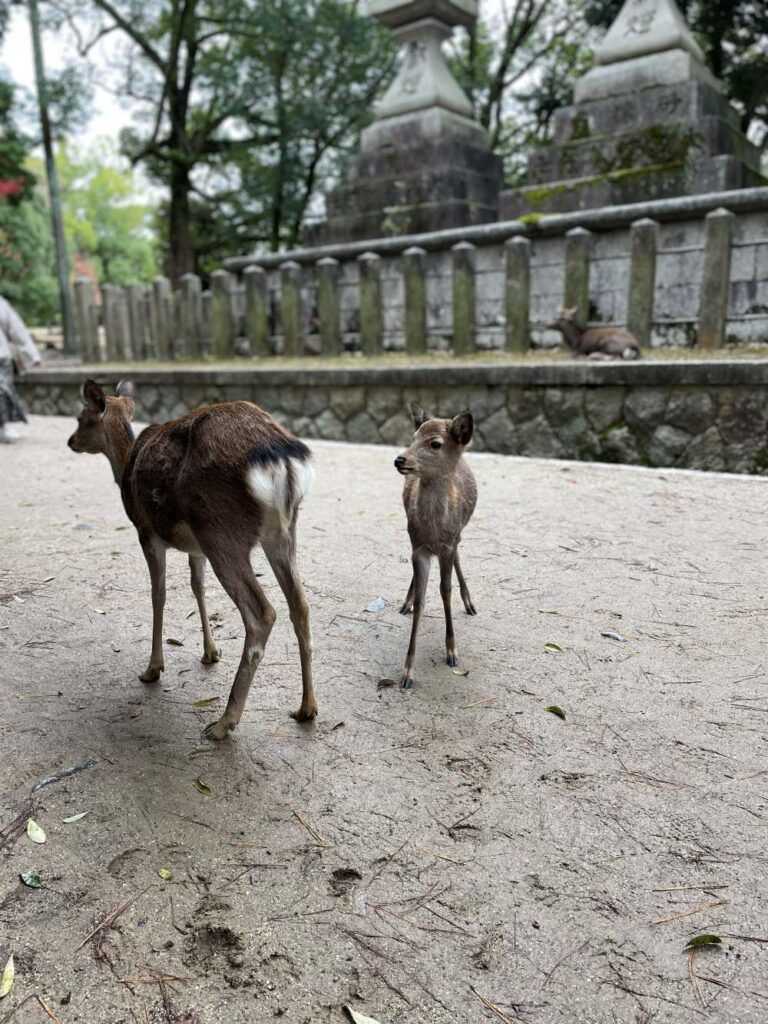
The deer are definitely the highlight of Nara. More than 1,000 deer live in and around Nara Park, and they are free to roam throughout the area. They aren’t behind fences or contained in one particular section of the park. You’ll see them walking along the paths, lying under the trees and standing around the temples.
The history behind the deer makes seeing them even more interesting. Deer have been associated with Nara for centuries and were traditionally considered sacred messengers of the gods. Today, they are protected as Natural Monuments of Japan.
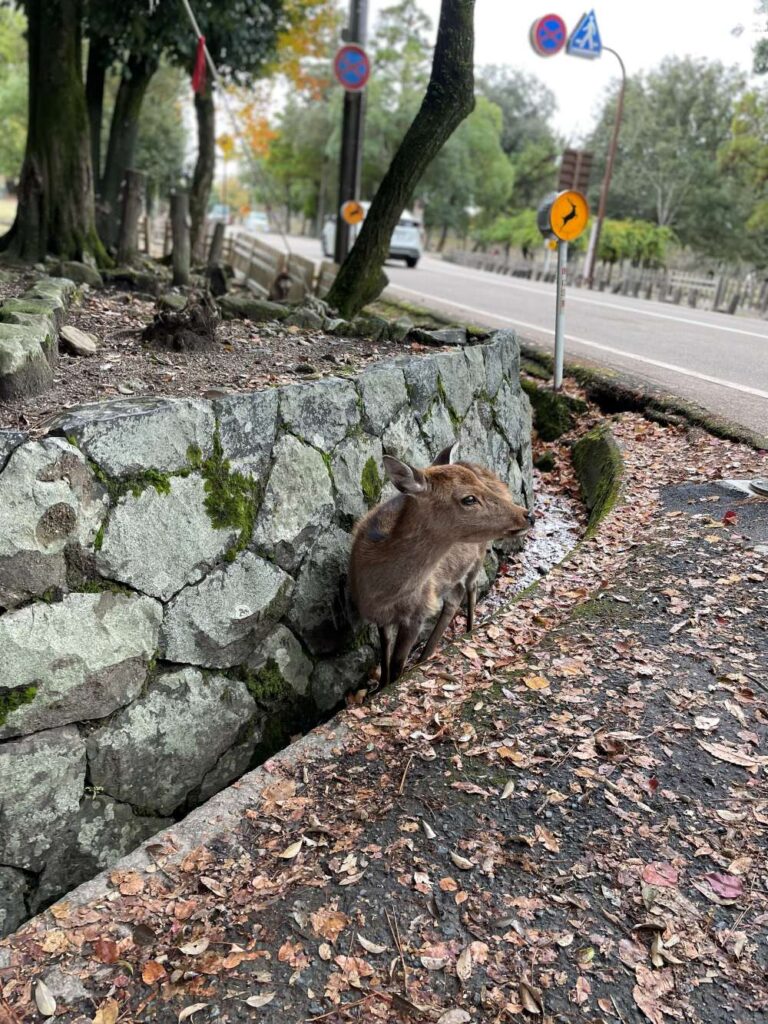
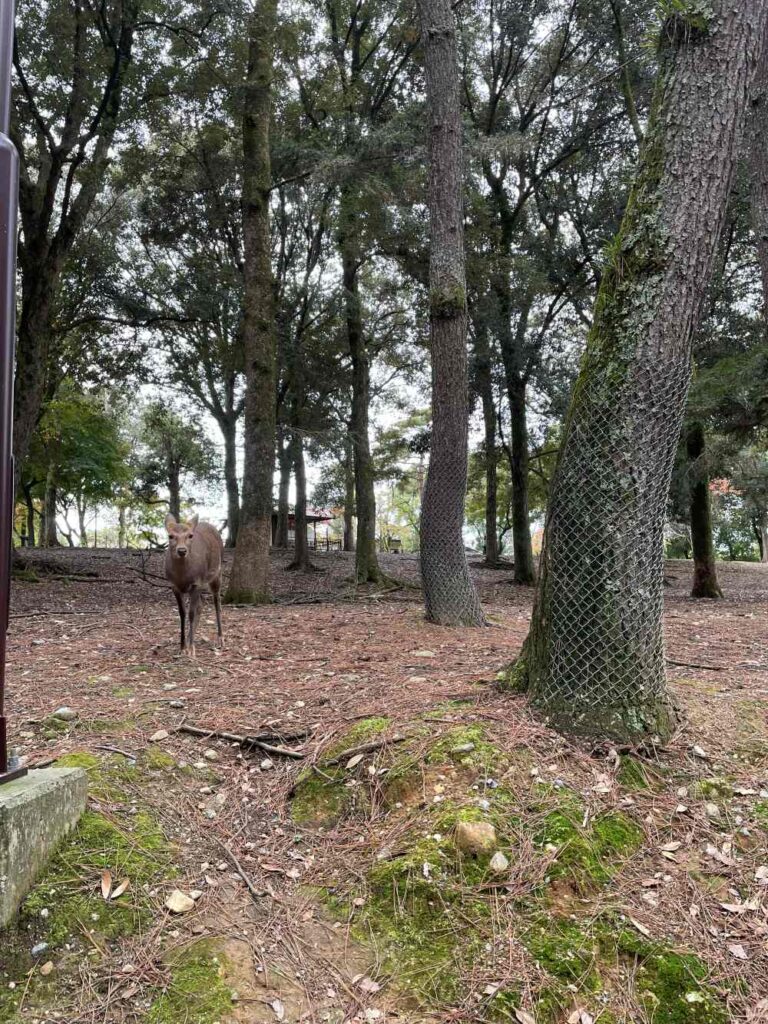
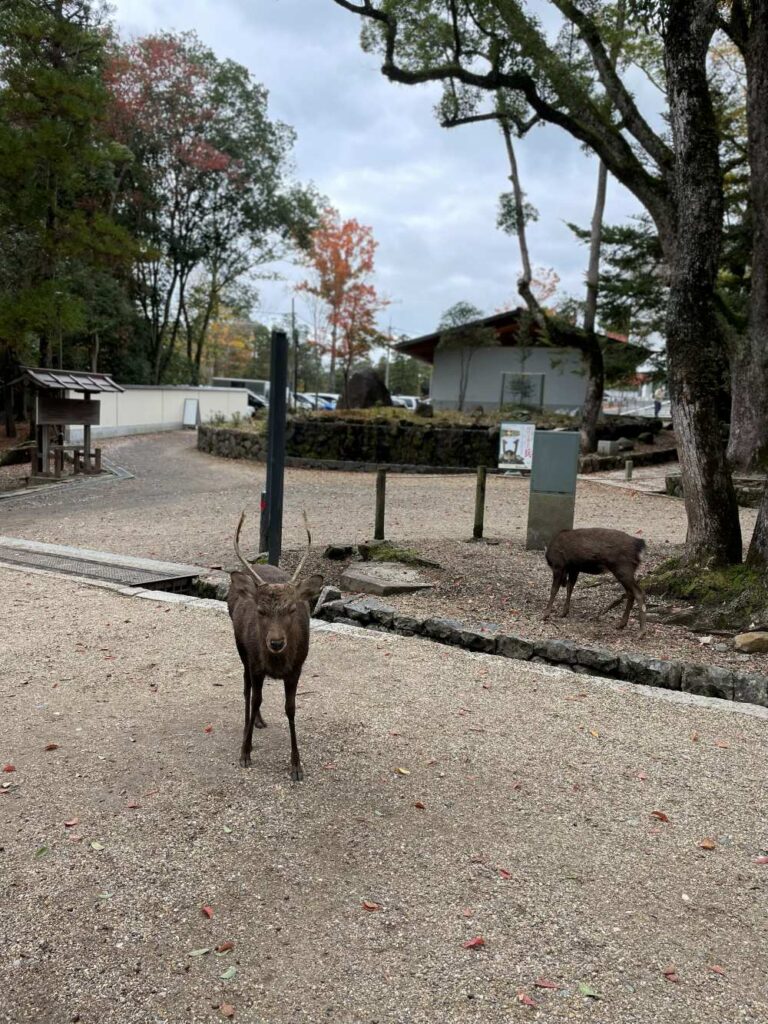
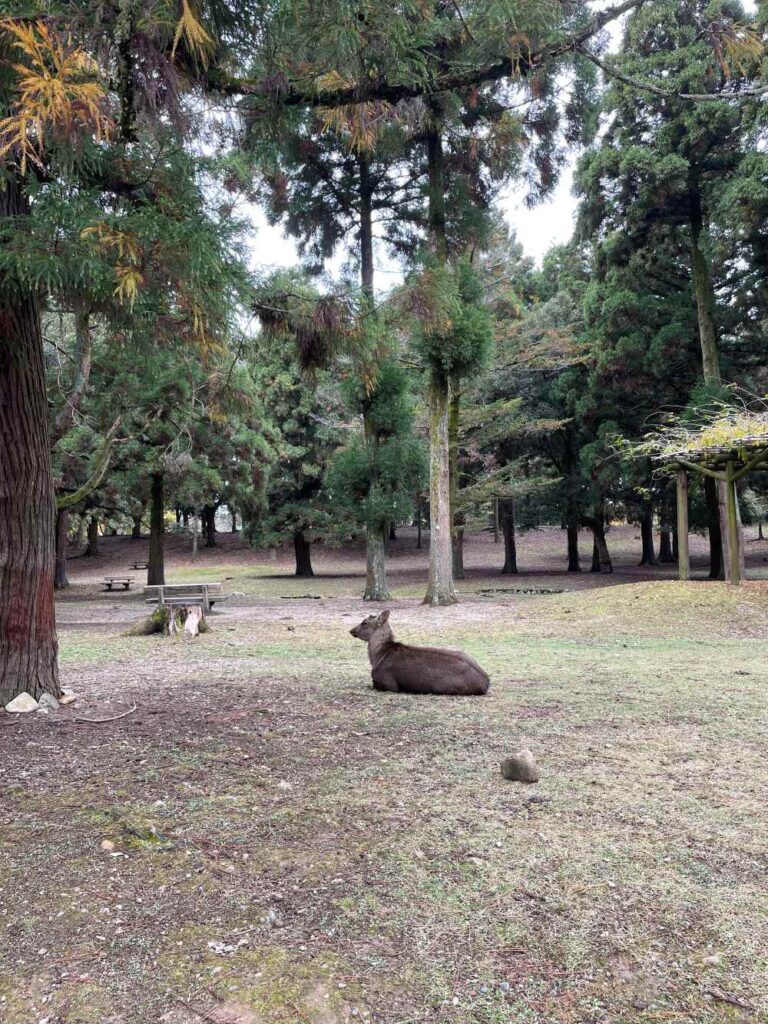
The first time you see a group of them wandering around, it feels a little strange in the best way. You’re surrounded by beautiful Japanese temples and historic buildings, and there are deer just casually walking through the middle of it all.
The Reality of Feeding the Deer
You can buy special deer crackers, called shika senbei, throughout Nara Park, and this is where the experience can get pretty entertaining. I noticed that a lot of people bought the crackers, and the deer immediately knew who had them. Once someone started feeding them, several deer would surround the person and follow them around looking for more. Some were very persistent, and I saw deer nip at people’s clothes or hands when they thought there might still be food.
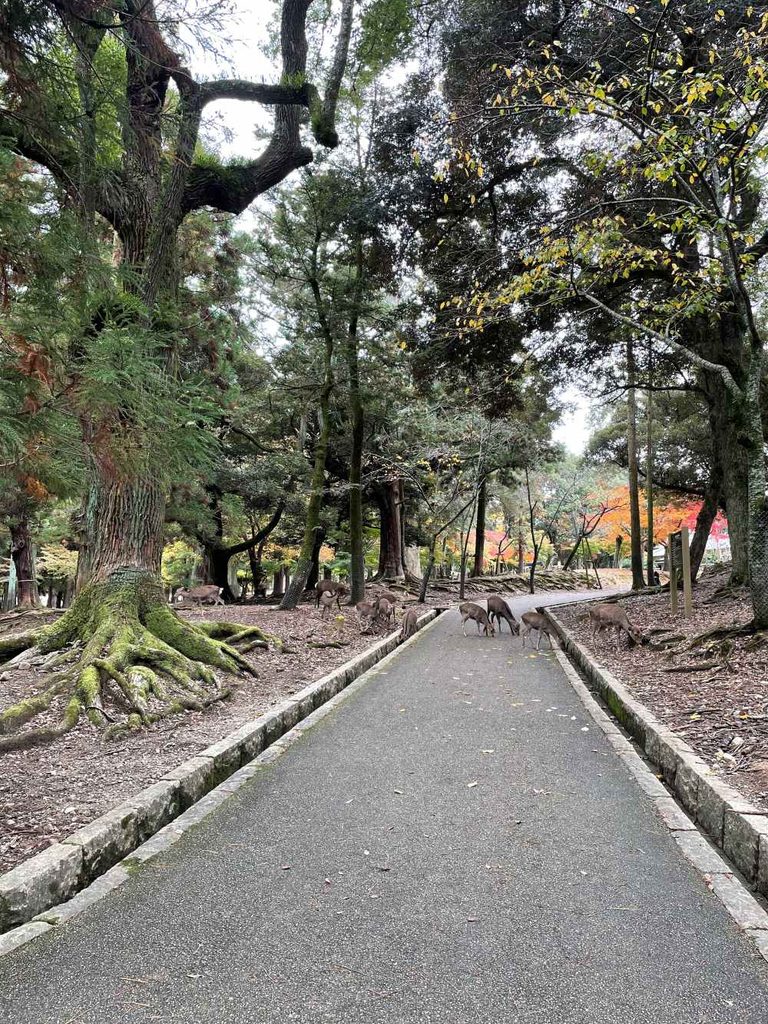
I purposely didn’t buy the deer food, and I was completely happy with that decision. Without crackers, the deer mostly left me alone. I could walk around them, watch them and take pictures without suddenly having a group of deer following me around. It actually made it easier to enjoy them.
If you want the experience of feeding the deer, it’s definitely something you can do. Just know that they can be surprisingly assertive once they realize you have food. Feed them the official deer crackers, and once you’re finished, hold up your empty hands so they understand that the food is gone.
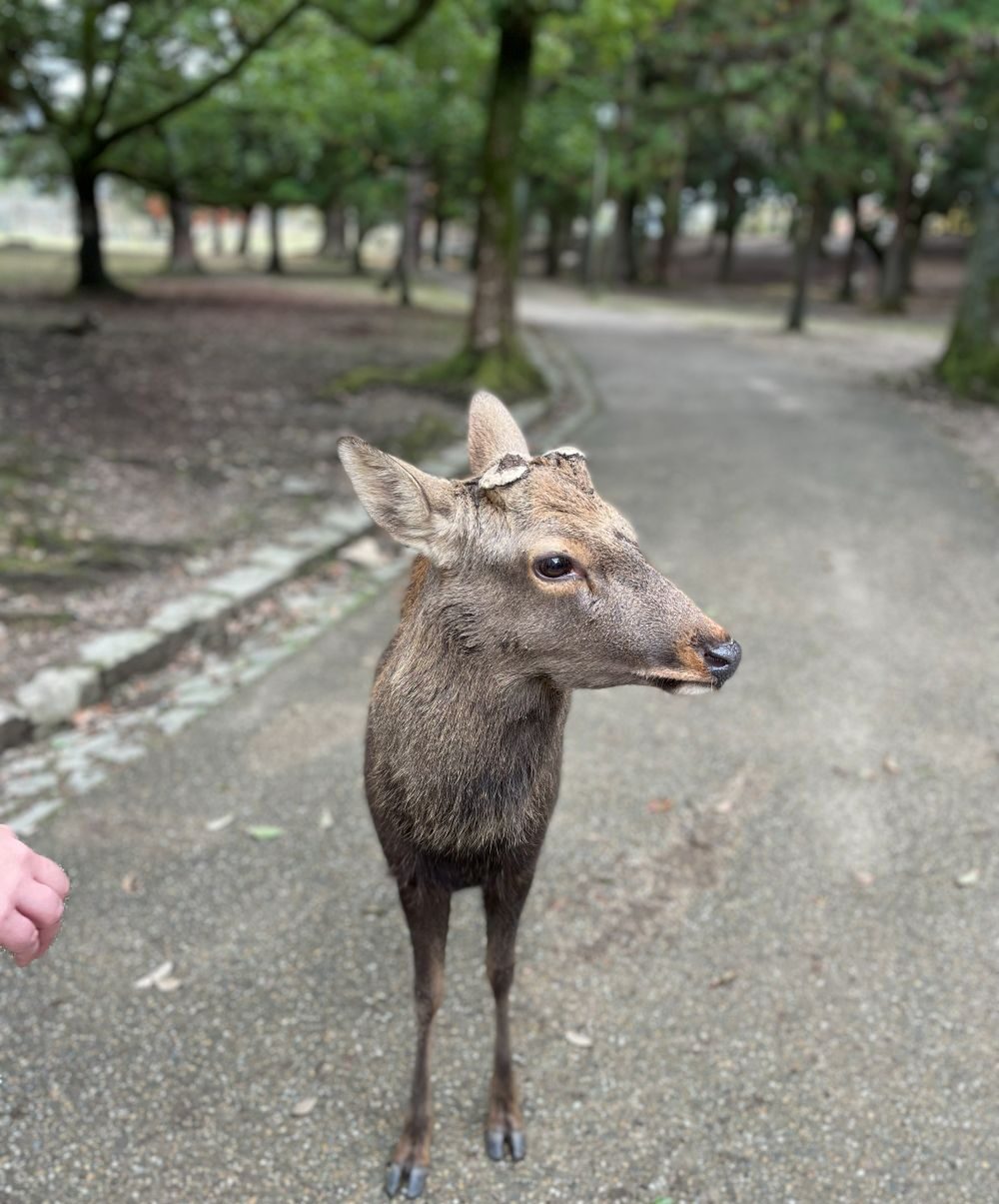
One thing I noticed around Nara Park was that some of the male deer had their antlers cut down to short stubs. This is actually a long-standing tradition in Nara, where the deer’s antlers are removed each year before mating season. The practice helps prevent injuries, since the deer can become more aggressive and territorial during the fall, and it’s especially important with so many visitors walking among them. The antlers naturally grow back the following year, so the deer aren’t permanently affected. There’s even an annual ceremonial antler-cutting event, making it a unique part of Nara’s long relationship with its famous deer.
The deer are a huge part of what makes Nara so memorable. Seeing them wandering freely through a historic Japanese park is one of those experiences that’s difficult to replicate anywhere else.
Exploring Nara Park
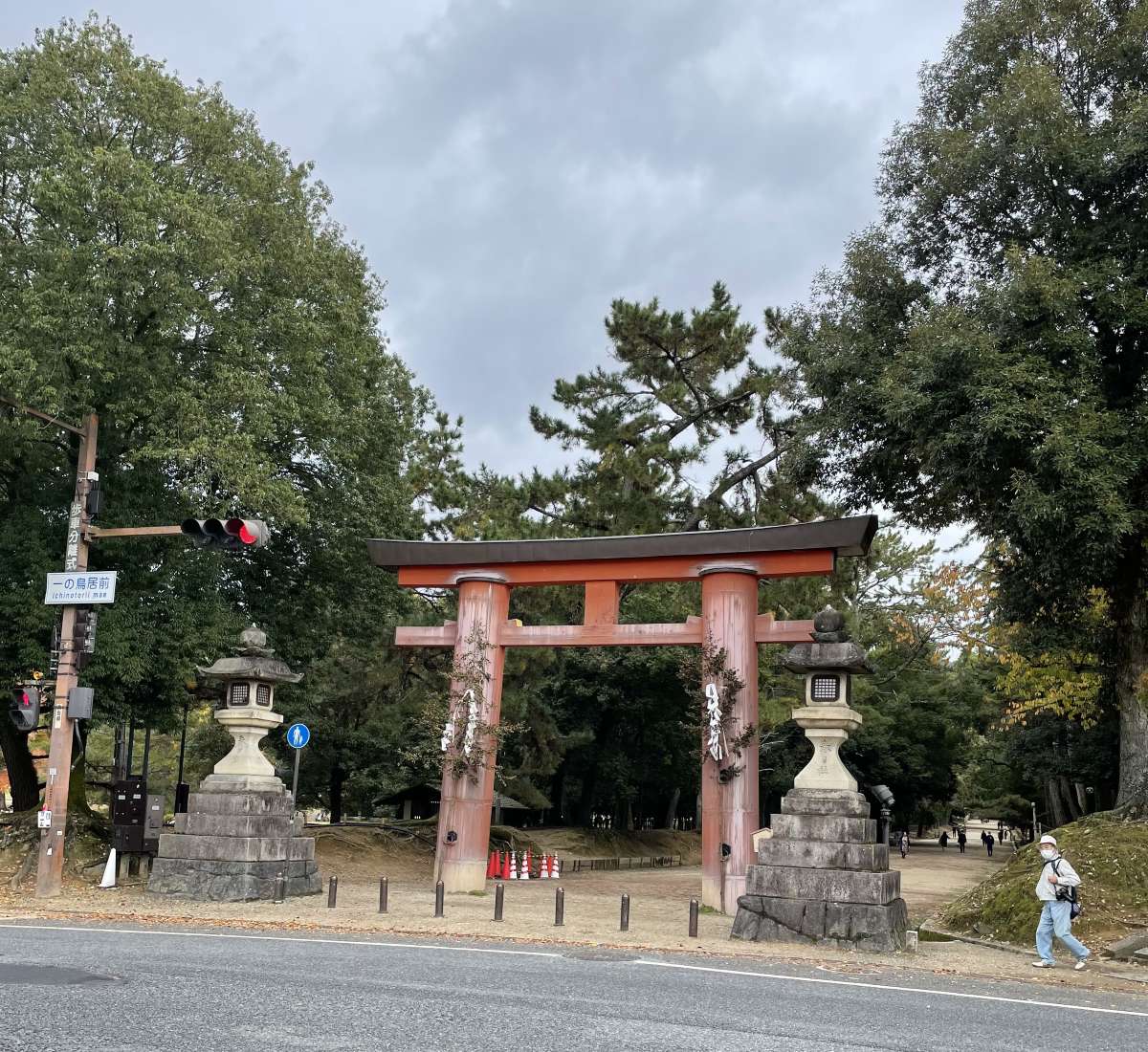
Nara Park is much larger than I expected. It’s not simply a small park built around the deer. The area stretches across a large part of Nara and includes temples, shrines, wooded paths and some of the city’s most important historic sites.
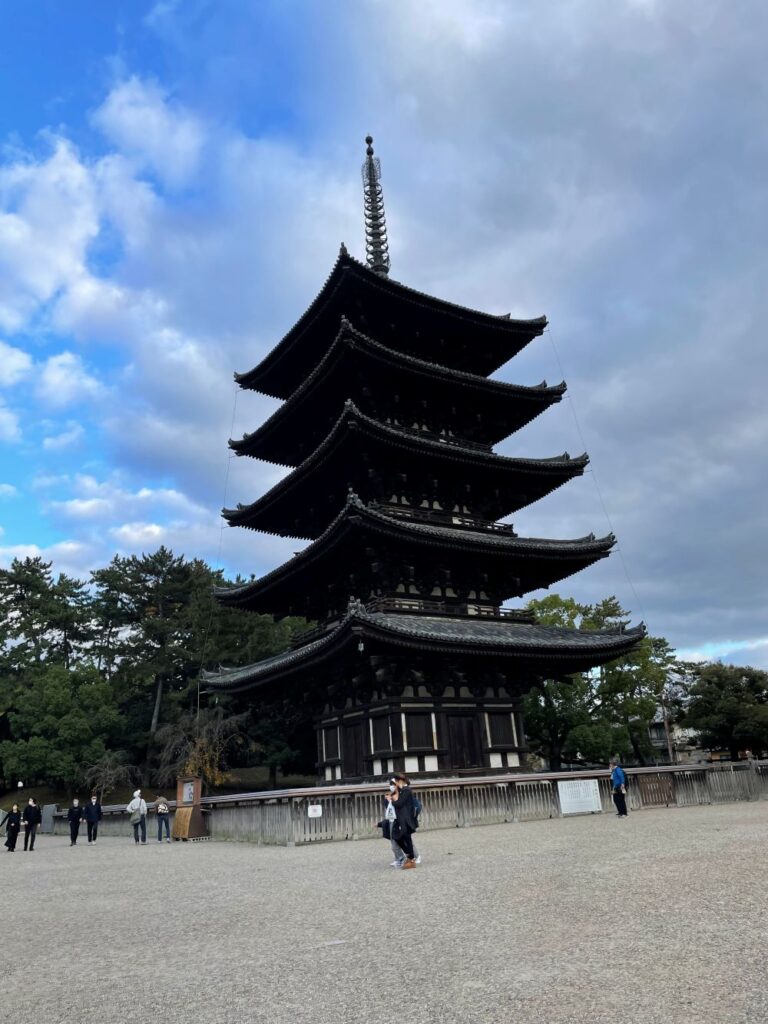
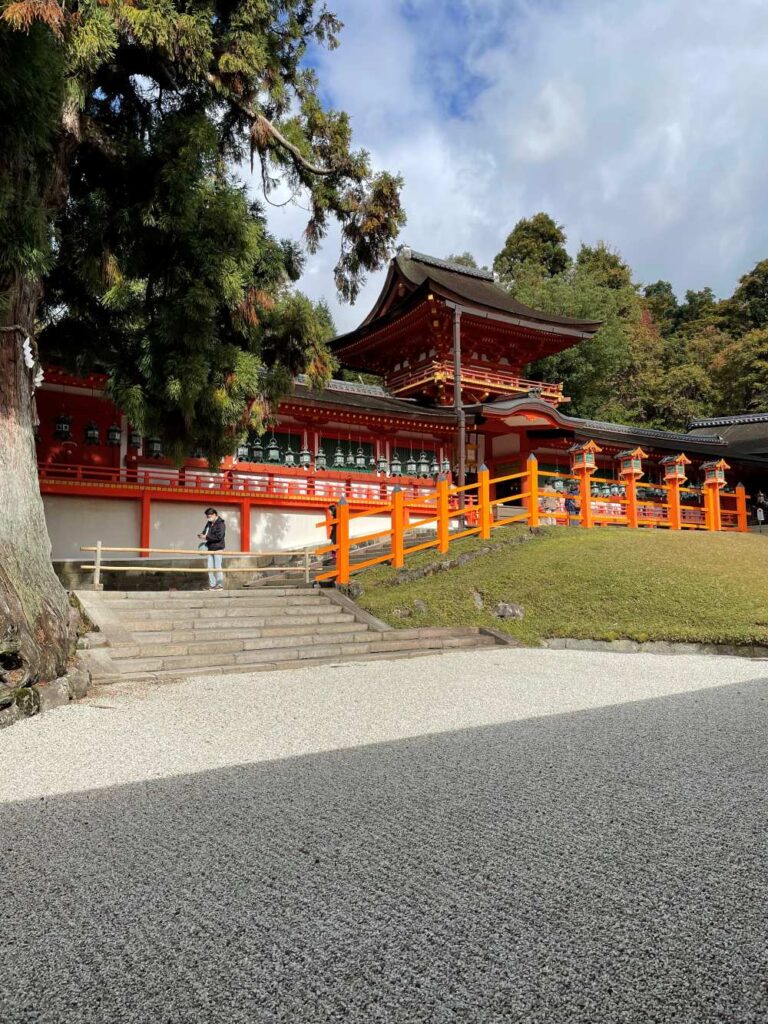
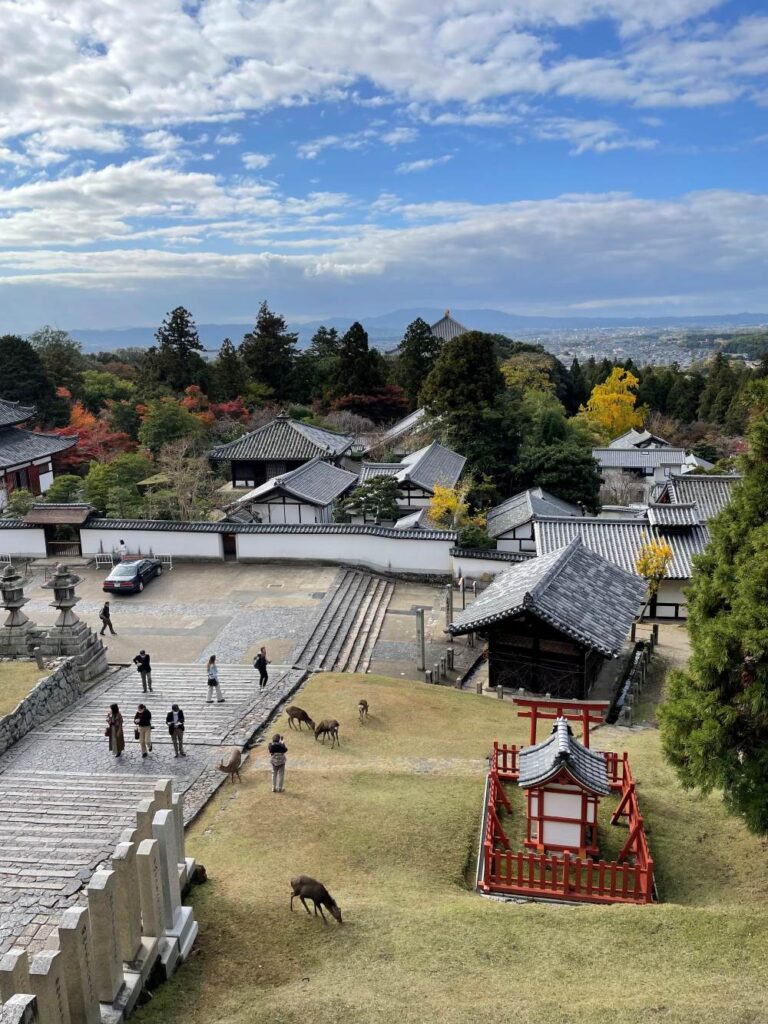
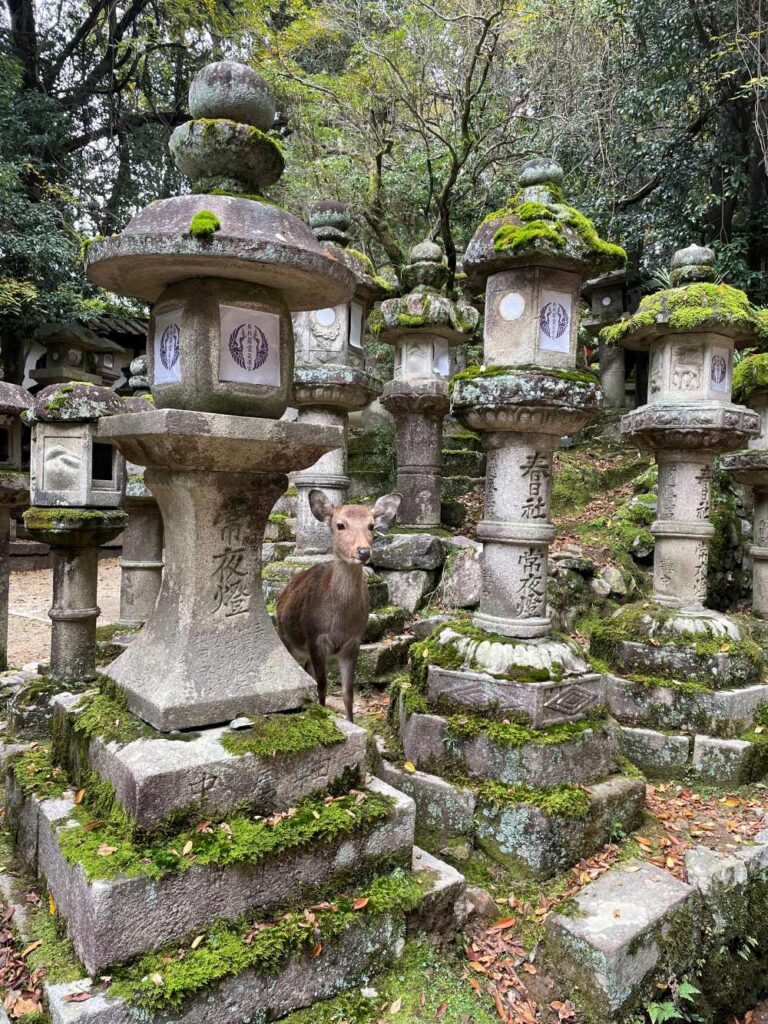
You can walk through the park and see deer along the way, then continue on to one of the major temples. The scenery changes constantly, from open green areas to tree-lined paths and enormous temple gates.
It’s also nice that you don’t have to follow one particular route. We could move between the different sights without worrying about transportation every few minutes.
Todaiji Temple and the Great Buddha
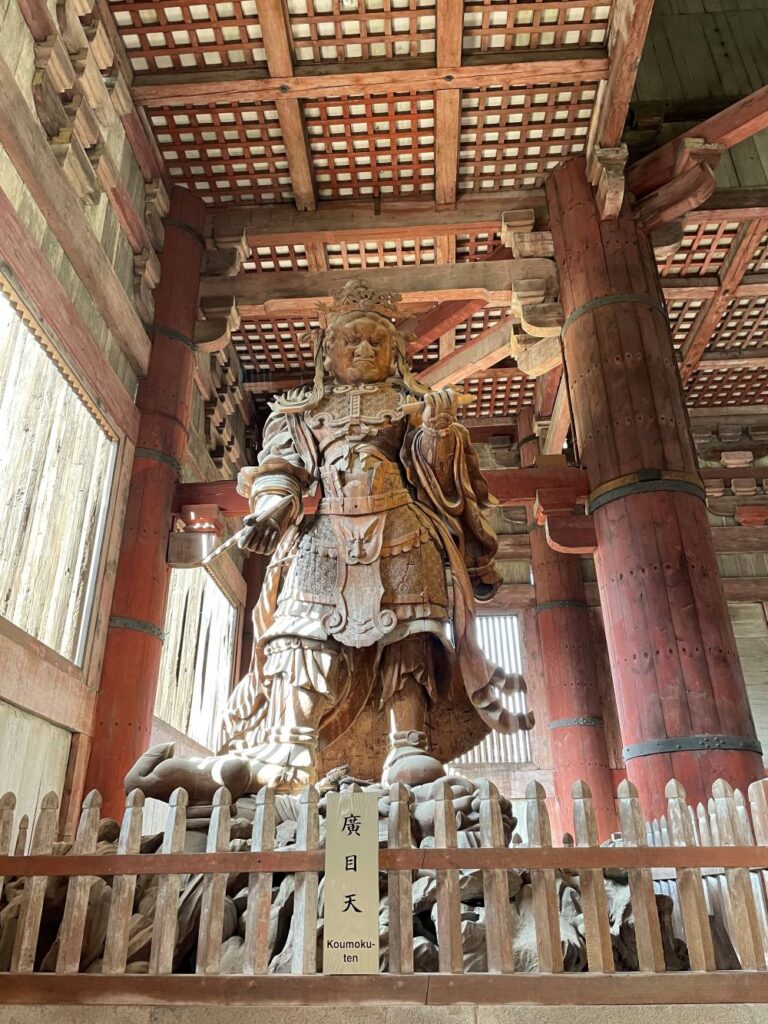
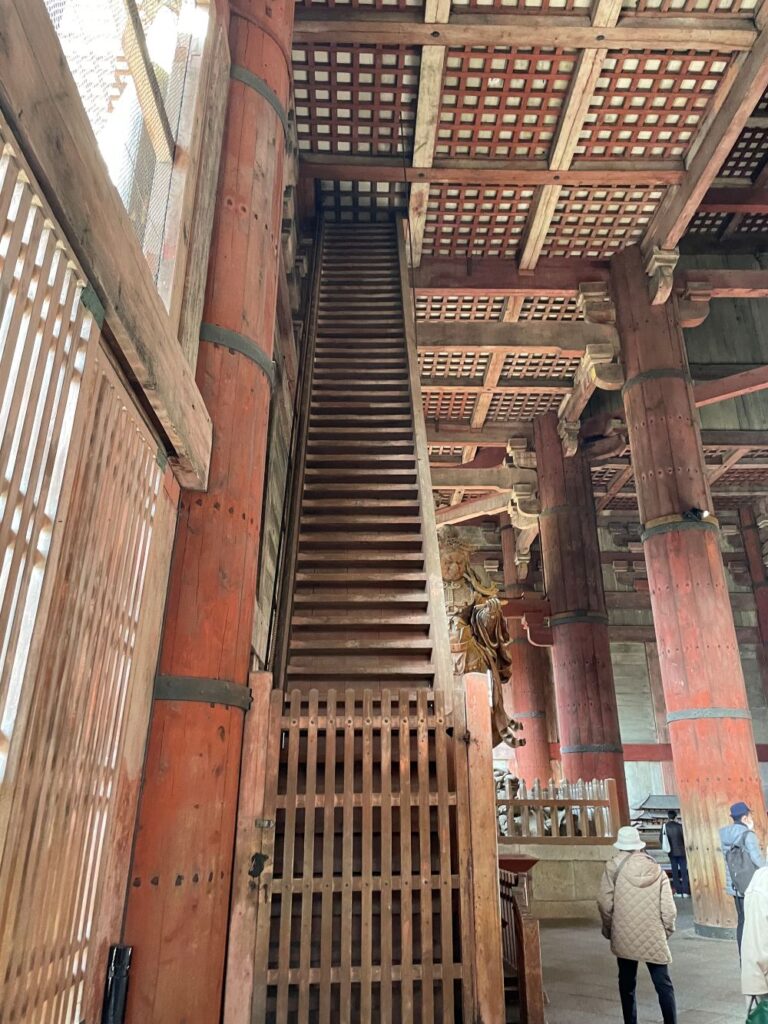
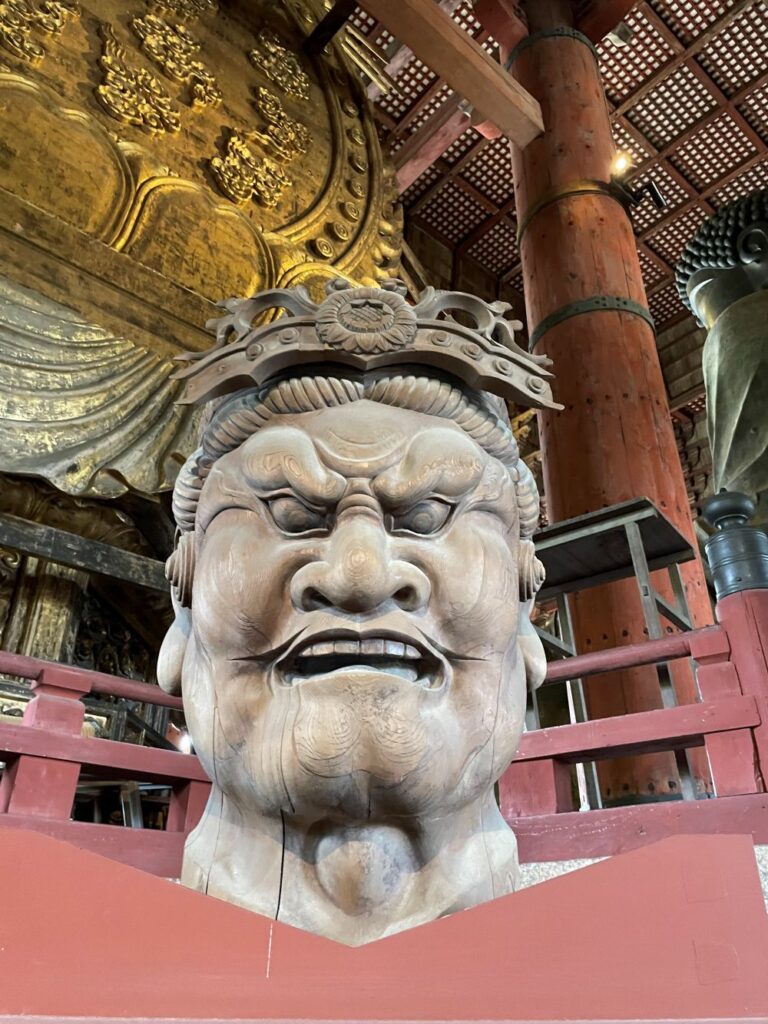
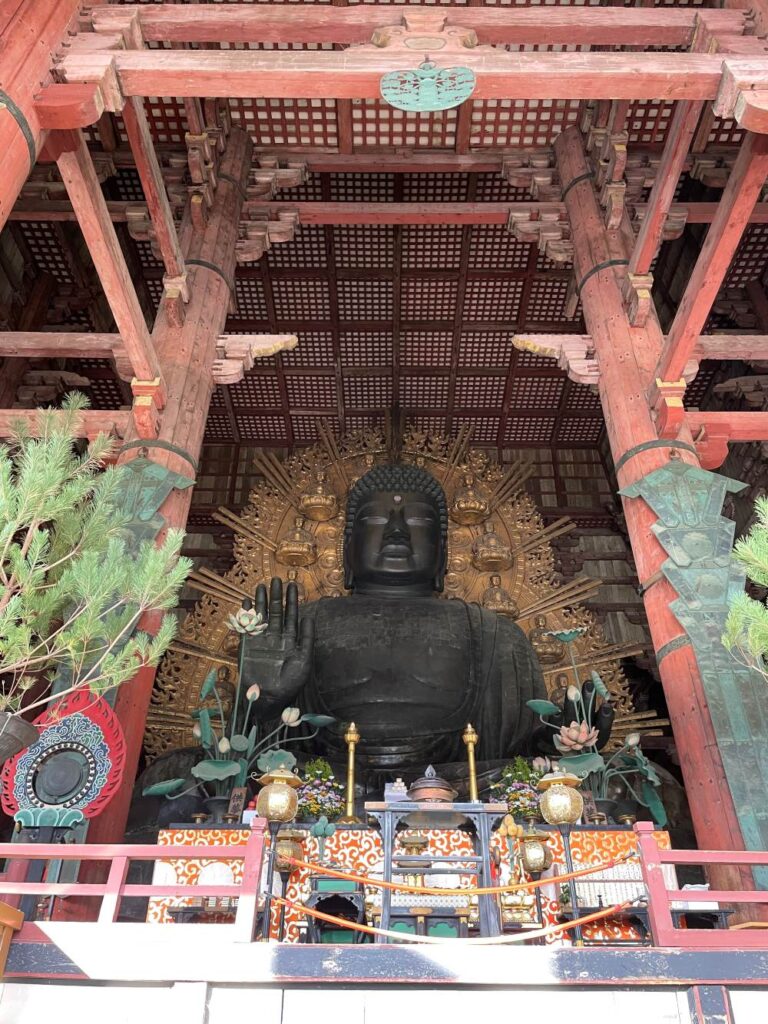
One of the major sights in Nara is Todaiji Temple, which is home to the enormous Great Buddha. The scale of the temple is impressive before you even walk inside. The massive Nandaimon Gate and its guardian statues are part of the approach, and then you reach the enormous wooden temple building that houses the Buddha.
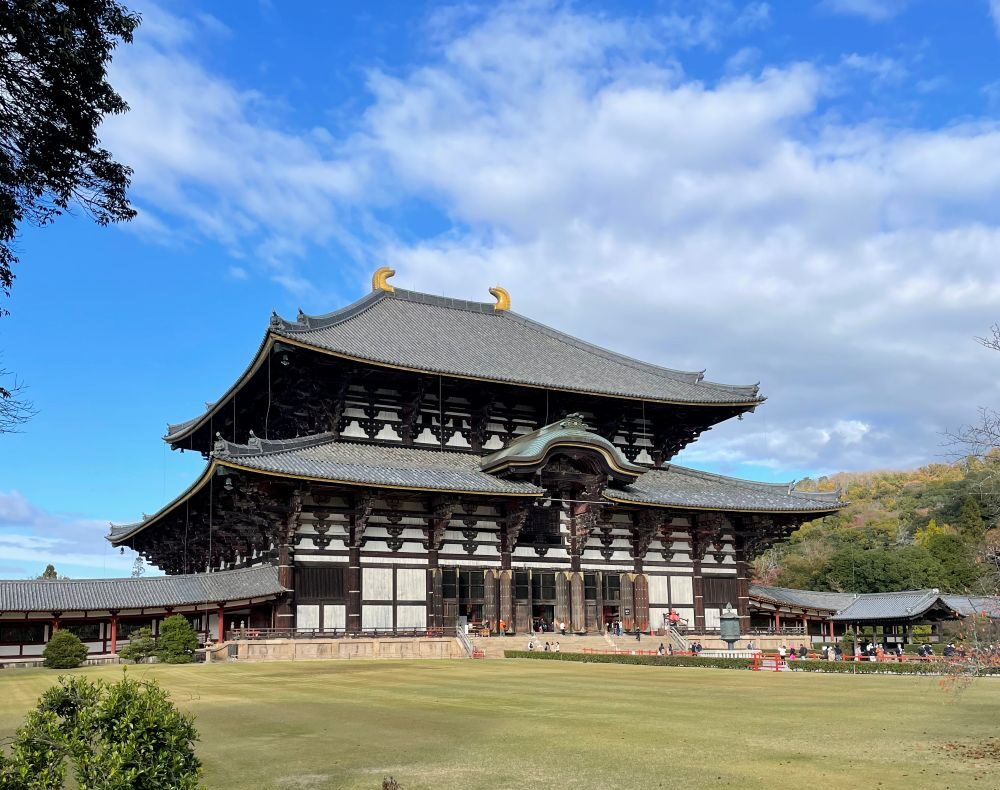
The Great Buddha itself is one of the most impressive things we saw in Nara. The sheer size of the statue makes it difficult to appreciate from photographs. What I especially liked about visiting Todaiji was the setting. You aren’t arriving at an isolated temple and then leaving. You’re walking through Nara Park, surrounded by trees and deer, before reaching one of Japan’s most important Buddhist temples.
Isuien Garden
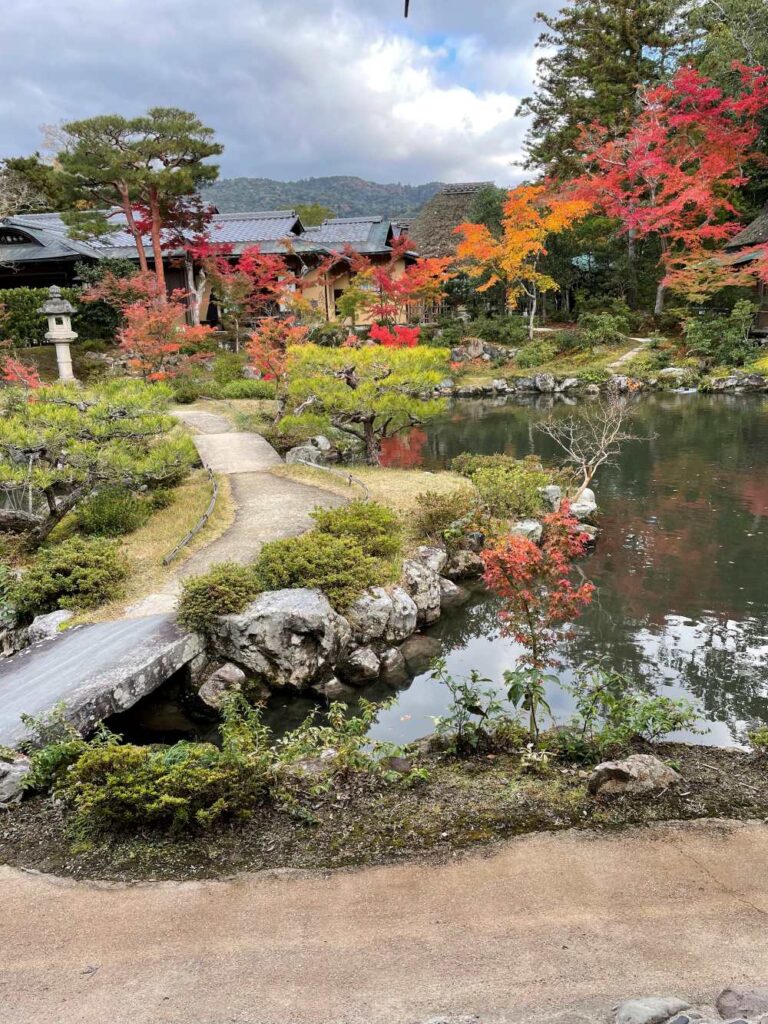
One of my favorite stops in Nara was Isuien Garden. Located near Nara Park and Todaiji Temple, Isuien is a traditional Japanese garden with ponds, bridges, stone paths, landscaped trees and traditional buildings. It’s incredibly beautiful and has a completely different feel from the busier parts of Nara Park.
The garden is made up of two sections from different periods, and the design incorporates the surrounding scenery into the garden itself.
Matcha at Isuien Garden
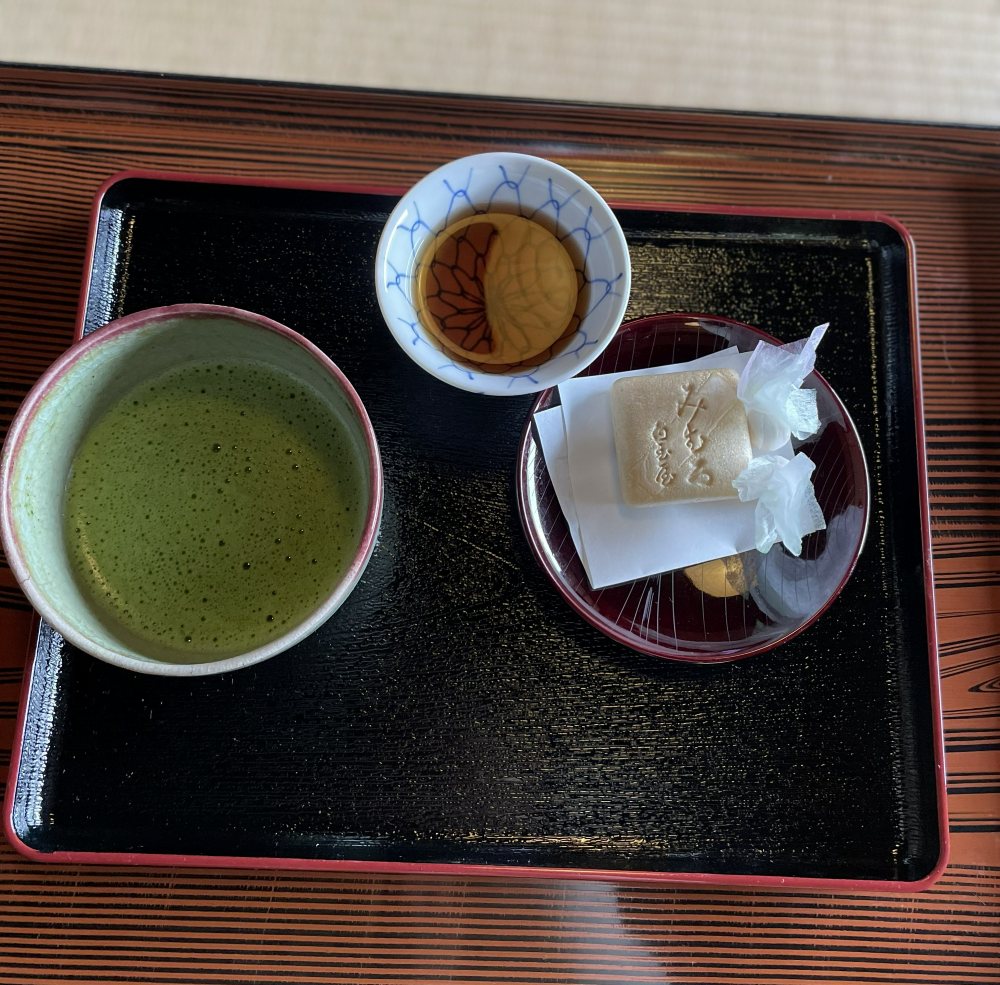
The best part for me was having matcha at Isuien Garden. After seeing the deer and walking around Nara Park and Todaiji, sitting down with a bowl of matcha overlooking the garden was such a great experience.
The setting really made it. You’re sitting in a traditional Japanese garden surrounded by ponds, greenery and beautiful architecture, with a bowl of freshly prepared matcha in front of you.
Isuien ended up being one of my favorite places we visited that day, and I would definitely recommend adding it to a Nara itinerary.
Why Nara Makes Such a Great Day Trip From Osaka
What makes Nara especially appealing is how much you can experience without spending a lot of time getting there. You can leave Osaka in the morning, be in Nara in well under an hour, and spend the day exploring the park, seeing the deer, visiting Todaiji and enjoying Isuien Garden before taking the train back to Osaka.
Nara feels different from both Osaka and Kyoto. Osaka is energetic and modern, while Kyoto is filled with temples and traditional neighborhoods. Nara combines its history with nature in a way that feels very unique. The deer are genuinely cool to see, especially because they aren’t confined to one attraction. They’re just part of Nara. They’re walking around the park, hanging out near the temples and interacting with the thousands of visitors who come to see them.
Overall, if you’re staying in Osaka and looking for an easy day trip that combines history, nature and a few unforgettable experiences, Nara is definitely worth adding to your itinerary.