Cartagena is the kind of city that’s best experienced with a loose plan and plenty of time to explore on foot. It’s busy, colorful, and full of energy, but easy to navigate once you get your bearings. We had a general outline for our trip, but left enough room to adjust as we went, which ended up being the right balance.
We stayed in an Airbnb just outside the city walls, and that ended up shaping the trip in a good way. It gave us quick access to the old city while still feeling connected to everyday life in Cartagena. You step outside and see people heading to work, small shops opening, and food vendors setting up.
This itinerary covers three days in Cartagena with a focus on how to move through the city, what to eat (including street food), and how to balance the historic areas with more local neighborhoods.

Affiliate Disclosure: Some of the links on this site are affiliate links. This means we may earn a small commission at no extra cost to you if you make a purchase through them. Read the policies to know more.
Where to Stay: Just Outside the Walled City
Staying outside the walled city worked better than expected. It was quieter at night, more affordable, and gave us a break from the constant foot traffic inside the historic center.
The building itself was simple but comfortable, with a rooftop pool that looked out toward both the skyline and the water. Everything we wanted to do was within walking distance, so we never felt disconnected.
If you’re deciding where to stay in Cartagena, this is a good middle ground, close enough to explore easily, but far enough to avoid feeling like you’re in a tourist-heavy zone the entire time.


3 Day Cartagena Itinerary
Spend 3 perfect days in Cartagena, Colombia, with this itinerary covering food, culture, beaches, and must-see sights.
Day 1: Arrival, Old City Walk, and First Meals
We arrived in the afternoon and headed straight to the Airbnb to drop off bags and reset. After that, we walked into the walled city without much of a plan. The transition is noticeable, streets narrow, buildings get more colorful, and there’s a steady mix of locals and visitors moving through the same spaces.
We started with a casual sit-down meal, grilled fish, coconut rice, and Patacones. Simple dishes, but really well done. Cartagena’s food leans on fresh ingredients and straightforward preparation, which works in its favor.
What stood out just as much, though, was the street food.
On the walk back, we stopped at a few vendors and tried empanadas (crispy, fried, filled with meat or cheese), mango slices with lime and salt, and freshly cooked arepas. Street food here isn’t something to skip, it ended up being some of the best food we had.

The city is full of energy in the evening. Walking through plazas and side streets, music shows up in different forms, sometimes live, sometimes just playing from a speaker nearby. It’s active but still relaxed.
Day 2: Exploring the Walled City
We started earlier on the second day, which made a difference. The old city is easier to take in before it gets busier, and it’s a good time to just walk without a plan.
The walled city isn’t large, but it’s dense. You move through narrow streets with colonial architecture, balconies covered in plants, and small plazas where vendors and performers gather. There’s enough variation from block to block to keep it interesting without needing a strict route.


Cartagena surprised me with its vibrant coffee culture, Colombia’s reputation for producing some of the world’s finest beans is on full display here. We found no shortage of spots serving rich, aromatic brews that reflect the country’s diverse coffee regions. One highlight was Café San Alberto in Plaza Santo Domingo, where the coffee was genuinely excellent, rich, smooth, and memorable enough to make you slow down and savor it.


We made our way up onto the city walls at one point, which is worth doing for the view. It gives you a better sense of how everything fits together – old city, coastline, and newer parts of Cartagena in the distance.
If it’s your first time visiting, this is also a good point in the trip to consider a walking tour. It helps with context and gives you a better feel for the layout early on.
Later in the day, we shifted back into food mode. We had another sit-down meal with more traditional dishes, rice, slow-cooked meats, and sauces with a lot of flavors.
But again, we kept going back to street food. We tried more empanadas, different fried snacks, and fresh juices from vendors. If a stand is busy, it’s usually a good sign.
This is also where doing a food tour or street food tour would make sense. It’s an easy way to try more variety and learn more about what you’re eating.
Day 3: Local Areas and Slower Exploration
By the third day, it made sense to step away from the historic center for a bit and spend more time in the neighborhoods just outside the walls, especially Getsemaní. It’s one of the most interesting parts of Cartagena because it still has the same energy and color as the old city, but feels more grounded in everyday life.
We started the day walking from our Airbnb toward Getsemani, which is only a few minutes from the walled city but feels noticeably different once you cross over. The streets are more residential, but that’s also where a lot of the character shows up. Walls are covered in large-scale murals, and almost every corner has some kind of street art or painted façade.
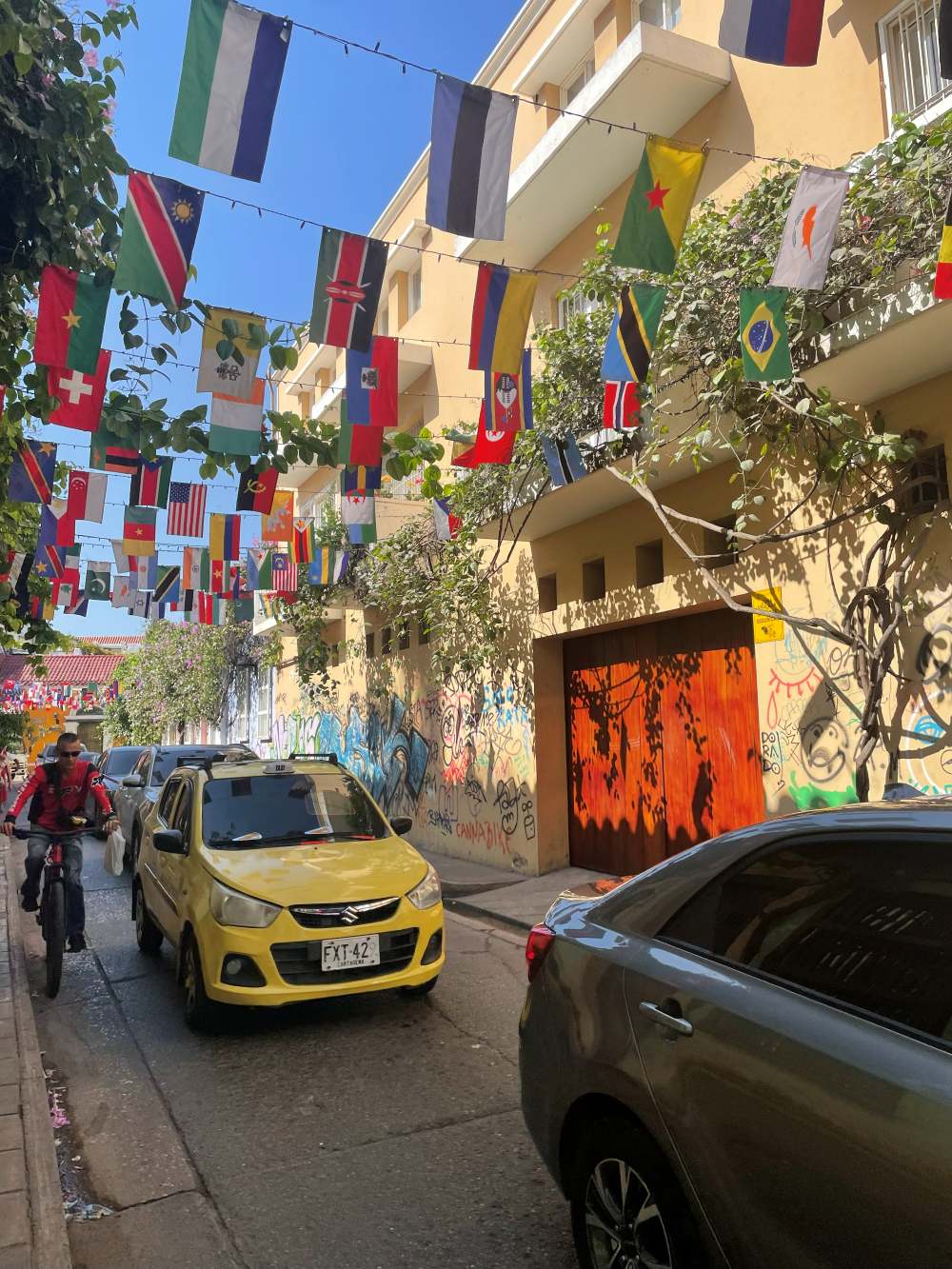


One of the main spots to spend time in is Plaza de la Trinidad. It’s a square in Getsemani where people naturally gather throughout the day. Even during the day, it feels lively, but in the evenings, it becomes one of the most social places in the city, with people sitting on the steps, music playing, and small groups forming around the plaza.
We also spent some time closer to the water. The beaches near Cartagena aren’t the main highlight, but being along the coast still adds to the overall experience.
A lot of people also use one of their days in Cartagena for a day trip to the nearby islands, especially the Rosario Islands. We didn’t end up doing it, but it’s a popular option if you’re looking for clearer water and more traditional beach time. Most tours leave in the morning and come back in the afternoon, so it’s an easy add-on if you want to break up the city pace.
We finished the trip with one more walk through the old city at night. By then, things felt more familiar, we weren’t checking maps as much, just moving through it naturally. We grabbed a final round of empanadas and kept it simple.
Food in Cartagena: What to Expect
Food is a big part of the experience, and it’s not limited to restaurants.
What stands out:
- Street food is everywhere and worth trying
- Fresh fruit and juices are widely available
- Sit-down meals tend to focus on seafood, rice, and grilled meats
You don’t need reservations for every meal. Some of the best food comes from smaller, informal places or street vendors.


Practical Tips for a Cartagena Trip
- Walk as much as possible—the city is compact and easy to navigate
- Mix restaurant meals with street food
- Consider a walking tour early in your trip to get your bearings
- Try a street food or food tour if you want to explore more local dishes
- Stay just outside the walled city for a more balanced experience
Final Thoughts on 3 Day Cartagena Itinerary
Cartagena works best when you keep things simple. Walk, eat, take breaks, and repeat. The combination of historic streets, strong food culture, and everyday activity gives the city its character.
Staying outside the walls gave us flexibility without losing access to what makes Cartagena interesting. We could step into the historic center when we wanted and step out when we didn’t.
If you’re planning a short trip, three days is enough to get a solid feel for the city.