After an overnight train ride from Bratislava to Krakow, Sandy and I got off the train, went to our hotel at Hotel Saski Krakow, Curio Collection by Hilton for breakfast and left our bags, and then we were off to the Wieliczka Salt Mine! Dating back to the 13th century, this UNESCO World Heritage site has long been one of Poland’s most treasured attractions.

Affiliate Disclosure: Some of the links on this site are affiliate links. This means we may earn a small commission at no extra cost to you if you make a purchase through them. Read the policies to know more.
Planning Your Visit to Wieliczka Salt Mine
Before you go, here are some important things to know. The mine maintains a constant temperature of 57-59°F year-round, so bring a light jacket even in summer. Comfortable walking shoes are essential—you’ll descend about 800 steps (though there’s an elevator to bring you back up). The standard tourist route takes about 2-3 hours, covering nearly 2 miles of walking through chambers and corridors.

We highly recommend booking your tickets in advance, especially during peak summer months, as tours can sell out. The mine is open year-round, but visiting on weekdays or during shoulder seasons means smaller crowds and a more intimate experience. Keep in mind that the tour involves stairs and narrow passages, so it may not be suitable for those with mobility issues, though accessible routes are available with advance notice.
Getting There
The Wieliczka Salt Mine was about an hour bus ride from our hotel. We opted to do the Auschwitz-Birkenau and Wieliczka Salt Mine Guided Full Day Tour we found on TripAdvisor so we could make sure we saw everything the first day that was outside of Krakow. We highly recommend this tour and getting the bag lunch they offer.
From the moment you step into the Wieliczka Salt Mine, you’re immersed in a vast underground maze spanning over 178 miles of tunnels. The descent down a wooden staircase builds anticipation, and 210 feet below, the scale of this centuries-old mine becomes clear.


The air is noticeably different down here—crisp and salt-rich, creating a natural aerosol therapy as you breathe in microscopic salt particles. For anyone with sinus or respiratory issues like myself, this was an unexpected bonus. I genuinely felt like I could breathe easier after spending time underground, which made the already incredible experience even more memorable.
The History Behind the “White Gold”
Once a hub for “white gold,” the mine is now a masterpiece of history and art. But salt wasn’t always just a seasoning—in medieval times, it was one of the most valuable commodities in Europe, used for preserving food and as currency. The Wieliczka mine operated continuously for over 700 years, only closing commercial operations in 2007. Legend has it that the mine was blessed by Princess Kinga of Hungary, who became the patron saint of Poland and salt miners.
According to the story, she threw her engagement ring into a salt mine in Hungary, and when workers dug in Wieliczka, they found both salt and her ring. This legend is why the mine’s most spectacular chapel bears her name. For centuries, miners worked in dangerous conditions, spending their entire lives underground, carving out not just salt but also the stunning chambers and sculptures we see today as acts of devotion and artistry.

What to Expect at Wieliczka Salt Mine
As you walk through salt-carved chambers filled with chapels, statues, and intricate sculptures, including a statue of Pope John Paul II, the craftsmanship shines under soft lighting, creating a magical atmosphere. The highlight is the Chapel of St. Kinga, a breathtaking underground church carved entirely from salt, with chandeliers and a stunning altar 330 feet below ground.


Within the Wieliczka Salt Mine, you’ll encounter several unique bodies of water that add to the mine’s enchanting atmosphere. These underground lakes and pools, formed by natural seepage and runoff, are stunning in their clarity and hue. The saline water, tinted by the surrounding salt deposits, creates striking reflections of the mine’s intricate carvings and chandeliers.


The most famous of these is the “Wieliczka Lake,” a vast, mirror-like body of water that glistens beneath the mine’s soft lighting, enhancing the ethereal beauty of the underground world. These saline pools not only contribute to the mine’s unique aesthetic but also play a role in its microclimate, adding to the overall sense of serenity and wonder.

A Day of Contrasts
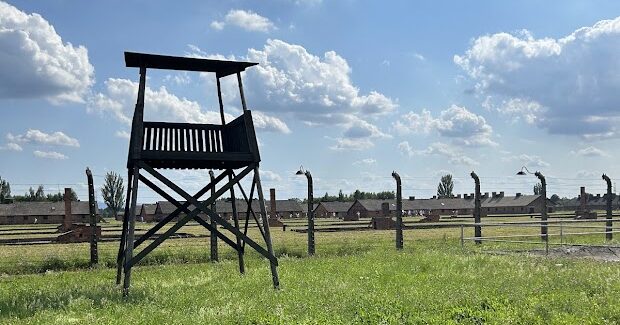
Visiting both Wieliczka and Auschwitz in one day created a powerful emotional journey. Starting with the beauty and wonder of the Salt Mine—a testament to human creativity and ingenuity—provided a sense of awe before the heavy, somber experience that awaited us at Auschwitz-Birkenau later that day. The contrast between these two sites made each more meaningful, and having them both in one day, though exhausting, felt like experiencing the full spectrum of Poland’s complex history.

Final Thoughts on Visiting Wieliczka Salt Mine
More than just a mine, Wieliczka is a testament to human creativity and ingenuity. Exploring its depths is a unique experience full of history, art, and nature. For anyone visiting Kraków, the Wieliczka Salt Mine is an unforgettable experience and a must-see.